


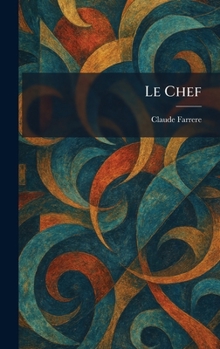
Le Chef

"Le Chef" is a sophisticated psychological novel that investigates the multifaceted nature of authority and the isolation that often accompanies high command. Written by the renowned author Claude Farr re, the work provides a deep dive into the psyche of a man positioned at the helm of power, forced to balance his personal convictions against the demands of his status. The narrative is as much a study of character as it is a critique of the social and political structures of the early 20th century.
Through the experiences of its central figure, the novel explores themes of duty, ambition, and the ethical compromises required to lead effectively. Farr re's signature style-marked by sharp observation and an understanding of human frailty-brings to life the tensions inherent in a life dedicated to leadership. "Le Chef" is a vital piece of literary fiction that remains relevant for its examination of what it means to be a leader in a complex world. This work captures the intellectual and emotional atmosphere of its era while offering universal truths about the exercise of power and the weight of responsibility.
This work has been selected by scholars as being culturally important, and is part of the knowledge base of civilization as we know it. This work was reproduced from the original artifact, and remains as true to the original work as possible. Therefore, you may see the original copyright references, library stamps (as most of these works have been housed in our most important libraries around the world), and other notations in the work.
This work is in the public domain in the United States of America, and possibly other nations. Within the United States, you may freely copy and distribute this work, as no entity (individual or corporate) has a copyright on the body of the work.
As a reproduction of a historical artifact, this work may contain missing or blurred pages, poor pictures, errant marks, etc. Scholars believe, and we concur, that this work is important enough to be preserved, reproduced, and made generally available to the public. We appreciate your support of the preservation process, and thank you for being an important part of keeping this knowledge alive and relevant.
Customer Reviews
ThriftBooks ® and the ThriftBooks ® logo are registered trademarks of Thrift Books Global, LLC
