


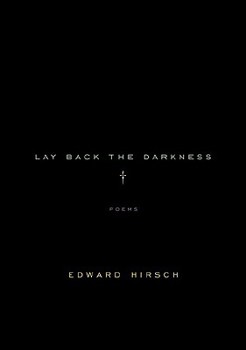
Lay Back the Darkness: Poems


Select Format
Select Condition 
Book Overview
Edward Hirsch's sixth collection is a descent into the darkness of middle age, narrated with exacting tenderness. He explores the boundaries of human fallibility both in candid personal poems, such as the title piece--a plea for his father, a victim of Alzheimer's wandering the hallway at night--and in his passionate encounters with classic poetic texts, as when Dante's Inferno enters his bedroom: When you read Canto Five aloud last night
in your naked, singsong, fractured Italian,
my sweet compulsion, my carnal appetite,
I suspected we shall never be forgiven
for devouring each other body and soul . . . From the lighting of a Yahrzeit candle to the drawings by the children of Terezin, Hirsch longs for transcendence in art and in the troubled history of his faith. In "The Hades Sonnets," the ravishing series that crowns the collection, the poet awakens full of grief in his wife's arms, but here as throughout, there is a luminous forgiveness in his examination of our sorrows. Taken together, these poems offer a profound engagement with our need to capture what is passing (and past) in the incandescence of language.
in your naked, singsong, fractured Italian,
my sweet compulsion, my carnal appetite,
I suspected we shall never be forgiven
for devouring each other body and soul . . . From the lighting of a Yahrzeit candle to the drawings by the children of Terezin, Hirsch longs for transcendence in art and in the troubled history of his faith. In "The Hades Sonnets," the ravishing series that crowns the collection, the poet awakens full of grief in his wife's arms, but here as throughout, there is a luminous forgiveness in his examination of our sorrows. Taken together, these poems offer a profound engagement with our need to capture what is passing (and past) in the incandescence of language.
Format:Paperback
Language:English
ISBN:0375710027
ISBN13:9780375710025
Release Date:September 2004
Publisher:Knopf Publishing Group
Length:88 Pages
Weight:0.66 lbs.
Dimensions:0.4" x 5.9" x 8.4"
Related Subjects
Biographical Biographies Biographies & History Biography & History Poetry Single AuthorsCustomer Reviews
1 rating
Most of it is quite good
Published by Thriftbooks.com User , 21 years ago
These poems run the gamut and are extremely allusive. They are book-ended by classically-driven pieces [i.e., the Odyssey] as well as Renaissance works [Dante]. Hirsch brings his own personal experiences to these renowned works and coopts their voices. The middle sections do not work as well, as they are "personal," or adopt the guise of so being; and they somehow do not hang together cleanly. There are some good pieces, however, like the concentration camp art of children, but the very confessional nature of them is not as strong as the less personal beginning and ending poems.
Copyright © 2026 Thriftbooks.com
Terms of Use | Privacy Policy | Do Not Sell/Share My Personal Information | Cookie Notice | Cookie Preferences | Accessibility Statement
ThriftBooks ® and the ThriftBooks ® logo are registered trademarks of Thrift Books Global, LLC
ThriftBooks ® and the ThriftBooks ® logo are registered trademarks of Thrift Books Global, LLC
