


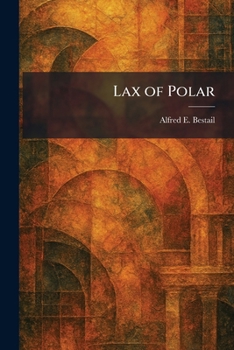
Lax of Polar

Select Format
Select Condition 
Book Overview
"Lax of Polar" is a compelling account of the life and spiritual mission of William Lax, a figure synonymous with the Methodist movement in London's East End during the early twentieth century. This work chronicles his tireless efforts to serve a community grappling with the challenges of poverty and social upheaval. Through a series of poignant anecdotes and personal reflections, the book illustrates the profound impact of faith-driven service and the practical application of Christian principles in an urban mission setting.
Blending biography with social observation, the narrative provides a vivid window into the daily lives of those living in the docklands of London. It highlights Lax's unique ability to connect with individuals from all walks of life, offering a message of hope and resilience. Enriched by the contributions of the noted creator Alfred E. Bestail, "Lax of Polar" serves as both an inspiring portrait of a dedicated minister and a valuable historical document of the Methodist Church's role in British social reform. It remains an essential read for those interested in the history of urban ministry and the enduring legacy of social activism in the heart of London.
This work has been selected by scholars as being culturally important, and is part of the knowledge base of civilization as we know it. This work was reproduced from the original artifact, and remains as true to the original work as possible. Therefore, you may see the original copyright references, library stamps (as most of these works have been housed in our most important libraries around the world), and other notations in the work.
This work is in the public domain in the United States of America, and possibly other nations. Within the United States, you may freely copy and distribute this work, as no entity (individual or corporate) has a copyright on the body of the work.
As a reproduction of a historical artifact, this work may contain missing or blurred pages, poor pictures, errant marks, etc. Scholars believe, and we concur, that this work is important enough to be preserved, reproduced, and made generally available to the public. We appreciate your support of the preservation process, and thank you for being an important part of keeping this knowledge alive and relevant.
Customer Reviews
ThriftBooks ® and the ThriftBooks ® logo are registered trademarks of Thrift Books Global, LLC
