

Skip to content
Scan a barcode
Scan
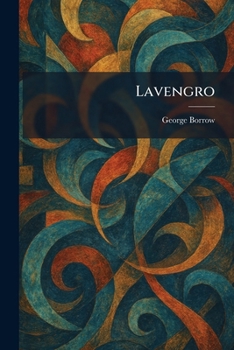
Paperback Lavengro Book

ISBN: 1025413105

ISBN13: 9781025413105

Lavengro

(Part of the Lavengro Series)

Select Format

Select Condition ThriftBooks Help Icon

Recommended

Format: Paperback

Condition: New

$24.95
Ships within 2-3 days
Save to List

Book Overview

"Lavengro" is a seminal semi-autobiographical work by George Borrow that blends travelogue, memoir, and fiction into a unique literary tapestry. Subtitled "The Scholar, the Gypsy, the Priest," the narrative follows a wandering protagonist-a polyglot and philologist-as he traverses the landscapes of 19th-century Britain and Ireland. Throughout his journey, he encounters a diverse cast of characters, most notably members of the Romany community, whose culture and language Borrow explores with profound curiosity and respect.

The work is celebrated for its vivid depictions of rural life, its deep engagement with linguistics, and its exploration of the protagonist's spiritual and intellectual development. From boxing matches to campfire conversations, Borrow's prose captures the essence of a world in transition, offering readers a rare glimpse into the subcultures and nomadic traditions of the Victorian era. "Lavengro" remains a cornerstone of 19th-century literature, praised for its idiosyncratic style and its atmospheric portrayal of the English countryside and the people who lived on its fringes. It is a compelling exploration of identity, language, and the pursuit of an unconventional life.

This work has been selected by scholars as being culturally important, and is part of the knowledge base of civilization as we know it. This work was reproduced from the original artifact, and remains as true to the original work as possible. Therefore, you may see the original copyright references, library stamps (as most of these works have been housed in our most important libraries around the world), and other notations in the work.

This work is in the public domain in the United States of America, and possibly other nations. Within the United States, you may freely copy and distribute this work, as no entity (individual or corporate) has a copyright on the body of the work.

As a reproduction of a historical artifact, this work may contain missing or blurred pages, poor pictures, errant marks, etc. Scholars believe, and we concur, that this work is important enough to be preserved, reproduced, and made generally available to the public. We appreciate your support of the preservation process, and thank you for being an important part of keeping this knowledge alive and relevant.

Customer Reviews

4 ratings

Among the English gypsies, mid-19c

I read an older edition of this reprint, written in the middle of the 19c by a polymathic, apparently largely self-educated, English wandering scholar who popularized his adventures, usually among the gypsies in England (as here) and later in Spain, as well as among the native Welsh. This book suits a lazy, digressive, and leisurely pace. Borrow cannot obtain a position in the military due to his father's lack of clout and little cash, so he goes to London to try to make his fortune by various legit and shady schemes, among them the shell game, publishing, and being a writer for hire. Outrageous coincidences occur in Dickensian style as he wanders about, running in to the same small circle of cronies over and over to instructive effect! I cannot tell where Lavengro ends and Romany Rye begins, but by the subtitle of the first, "The Priest, the Scholar, and the Gypsy," I assume this refers to Borrow's conversations with these folks on philological, historical, and theological topics. The latter part of the work finds Borrow trying to pursue a trade as a smith while living in a dingle, courting a refugee lass from a pair of pugilistic thieves--whom Borrow tries to teach Armenian as a covert way with which to communicate with her--and carrying on with a very freethinking lifestyle against authority, very early Victorian style. No dates and few locales are given, so all of this happens in sort of post-Regency vacuum. Borrow in that long-winded, autodidactic, eccentric manner latches on to a hobby-horse and rides it as long as he wishes, but he manages to be provocative, entertaining, and a wonderful companion, probably more so on paper than he might be in person! His obsessive determination to teach an ex-workhouse girl Armenian declensions and conjugations strikes me as either wonderfully tongue-in-cheek or dismayingly oblivious. The pleasure of the book is that I cannot decide which.

An autobiographical novel of late nineteenth century England

George Borrow lived in England during the nineteenth century. This book and it's sequel "The Romany Rye" are somewhat autobiographical in the way that "Portrait of the Artist as a Young Man" is autobiographical about James Joyce. This book is also not a novel in its true form. It's more a vivid description of the English countryside and what it was like during Borrow's lifetime. The book and its sequel were not very well received when first published because English people did not want to read about gypsies and the gypsy lifestyle. Borrow's black psyche comes through in these pages quite clearly as he tries to explain his life and the problems that he encounters. As I read the book, I felt it was like seeing a real man's life, as it surely was. There are three main characters in the book - a scholar, a Gypsy and a Priest. Borrow takes quite a kick at Roman Catholicism and the pomp and circumstance of that religion in his book. But even with that his Priest is a shown as a very good man trying to bring his message to the masses. I did not read the next book "The Romany Rye", but this one was pretty good as a stand-alone.

Literary buff's joy

I thoroughly enjoyed Borrow and look forward to meeting this character in heaven, where I believe he and Tolkien are having a great time talking philology. This is one of those books that, when you are done reading, you feel that you have made a friend and you miss him now that it's over. I am eager to read his other writings.

entertaining, educational, particularly memorable

This book (including Romany Rye, the sequel) is not an example of high-minded literature, but rather the account of Borrow's early life, and the beginning of his adventures. All escapades take place in the United Kingdom, of which he is admirably patriotic. As a character, he is actually somewhat quiet; but the situations and especially people he meets are both tangibly real (to a degree that I find unusual in a work of that time) and outlandish by any standards, Victorian (?) England's or ours. Above all the stories were fascinating, and are stamped permanently in my memory.While one needs a taste for the "philological" to enjoy and understand these adventures, they are still only marvelous anecdotes, including brilliant character portraits and memorable descriptions.One small quality that I appreciated, particularly since he writes so much of his experiences with Gypsies, is that Borrow is probably less rascist than many of his contemporaries seem to b! e.By the way: while The Bible in Spain has the same qualities as Lavengro and Romany Rye, it is not nearly as well written; he indulges his taste for dry ramblings much more, and the interesting stories seem almost arbitrary in when he tells them and when he ends them; were he still alive, there would be much that I'd like him to elaborate on.If anyone can tell me about his other writings (I have the impression that the quality can vary) I'd really appreciate some advice through email.
Copyright © 2026 Thriftbooks.com Terms of Use | Privacy Policy | Do Not Sell/Share My Personal Information | Cookie Policy | Cookie Preferences | Accessibility Statement
ThriftBooks ® and the ThriftBooks ® logo are registered trademarks of Thrift Books Global, LLC

GoDaddy Verified and Secured