


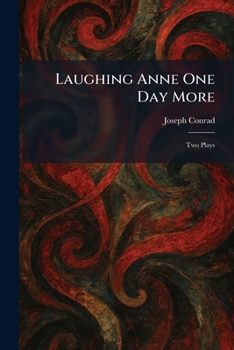
Laughing Anne One Day More: Two Plays

"Laughing Anne One Day More: Two Plays" showcases the dramatic talent of Joseph Conrad, one of the most celebrated figures in English literature. This volume brings together two stage adaptations of his own prose, highlighting his ability to translate atmospheric tension and psychological complexity into a theatrical format.
The first play, "Laughing Anne", is a dramatization of Conrad's story "Because of the Dollars." Set in the Malay Archipelago, it tells a gripping story of a woman's desperate struggle for survival and redemption amidst a cast of dangerous outcasts. The work explores themes of fidelity and the harsh realities of life in the colonial Pacific.
The second play, "One Day More", is adapted from the story "To-morrow." It presents a poignant and claustrophobic study of obsession and deferred hope. The narrative centers on a retired sea captain who remains convinced that his estranged son will return the following day, a delusion that traps those around him in a cycle of longing and despair. Together, these plays offer a profound exploration of human vulnerability and the tragic consequences of isolation, making this collection a vital addition to the Conradian canon.
This work has been selected by scholars as being culturally important, and is part of the knowledge base of civilization as we know it. This work was reproduced from the original artifact, and remains as true to the original work as possible. Therefore, you may see the original copyright references, library stamps (as most of these works have been housed in our most important libraries around the world), and other notations in the work.
This work is in the public domain in the United States of America, and possibly other nations. Within the United States, you may freely copy and distribute this work, as no entity (individual or corporate) has a copyright on the body of the work.
As a reproduction of a historical artifact, this work may contain missing or blurred pages, poor pictures, errant marks, etc. Scholars believe, and we concur, that this work is important enough to be preserved, reproduced, and made generally available to the public. We appreciate your support of the preservation process, and thank you for being an important part of keeping this knowledge alive and relevant.
Customer Reviews
ThriftBooks ® and the ThriftBooks ® logo are registered trademarks of Thrift Books Global, LLC
