


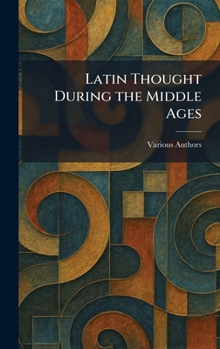
Latin Thought During the Middle Ages

"Latin Thought During the Middle Ages" offers a comprehensive exploration of the intellectual landscape that shaped Western civilization from the fall of Rome to the dawn of the Renaissance. This work examines the profound influence of Latin as the universal language of scholarship, theology, and law, tracing the development of scholasticism and the preservation of classical wisdom. Readers will encounter the evolution of philosophical inquiries, the intricate relationship between faith and reason, and the ways in which medieval thinkers reconciled ancient texts with contemporary religious doctrines.
By synthesizing various perspectives on the era's cultural and academic advancements, this volume provides essential insights into the core tenets of medieval logic, metaphysics, and ethics. "Latin Thought During the Middle Ages" serves as a vital resource for understanding how the intellectual traditions of the period laid the foundations for modern Western thought, making it an indispensable read for students of history, philosophy, and medieval studies.
This work has been selected by scholars as being culturally important, and is part of the knowledge base of civilization as we know it. This work was reproduced from the original artifact, and remains as true to the original work as possible. Therefore, you may see the original copyright references, library stamps (as most of these works have been housed in our most important libraries around the world), and other notations in the work.
This work is in the public domain in the United States of America, and possibly other nations. Within the United States, you may freely copy and distribute this work, as no entity (individual or corporate) has a copyright on the body of the work.
As a reproduction of a historical artifact, this work may contain missing or blurred pages, poor pictures, errant marks, etc. Scholars believe, and we concur, that this work is important enough to be preserved, reproduced, and made generally available to the public. We appreciate your support of the preservation process, and thank you for being an important part of keeping this knowledge alive and relevant.
Customer Reviews
ThriftBooks ® and the ThriftBooks ® logo are registered trademarks of Thrift Books Global, LLC
