


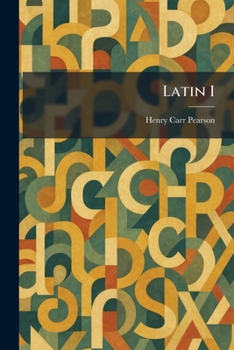
Latin I

The text emphasizes the connection between Latin and English, highlighting the etymological roots that continue to shape modern communication. Students are introduced to the formal structures of the language through clear explanations and practical exercises that reinforce declensions, conjugations, and stylistic nuances. Beyond linguistic mechanics, the work provides a window into the cultural and historical context of ancient Rome, making it an invaluable resource for those pursuing classical studies, law, medicine, or the humanities.
Ideal for classroom use or self-directed study, "Latin I" remains a testament to the systematic approach to language acquisition that defined early twentieth-century classical education. Its clear methodology ensures that readers develop the analytical skills necessary to engage with the great works of Roman literature and history in their original form.
This work has been selected by scholars as being culturally important, and is part of the knowledge base of civilization as we know it. This work was reproduced from the original artifact, and remains as true to the original work as possible. Therefore, you may see the original copyright references, library stamps (as most of these works have been housed in our most important libraries around the world), and other notations in the work.
This work is in the public domain in the United States of America, and possibly other nations. Within the United States, you may freely copy and distribute this work, as no entity (individual or corporate) has a copyright on the body of the work.
As a reproduction of a historical artifact, this work may contain missing or blurred pages, poor pictures, errant marks, etc. Scholars believe, and we concur, that this work is important enough to be preserved, reproduced, and made generally available to the public. We appreciate your support of the preservation process, and thank you for being an important part of keeping this knowledge alive and relevant.
Customer Reviews
ThriftBooks ® and the ThriftBooks ® logo are registered trademarks of Thrift Books Global, LLC
