


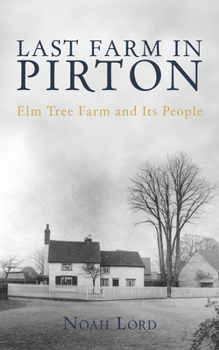
Last Farm In Pirton: Elm Tree Farm and Its People

What do an old farmhouse, a vanished farm, Tudor court entries, Victorian sale particulars, wartime farming, village memory, and one modern family have in common?
They all meet at Elm Tree.
In Last Farm in Pirton: Elm Tree Farm and Its People, Rupert Hennen and Noah Lord trace the long life of one Hertfordshire farmstead from its uncertain early record to its survival in the present day as Elm Tree Farmhouse. What begins as the story of an old house opens into something larger: a history of land, labour, family, change, and the quiet persistence of place.
Drawing on surviving buildings, local history, archival traces, listing material, sale particulars, wartime farming references, and village memory, this newly expanded second edition follows the farm through the Collisons, the Kings, the Gurneys, and the Walkers, before arriving at the modern house that still stands after the farm itself has gone.
Along the way, the book explores:
the problem of Crabbes, Crabbes Cottage, and Elmtree Farm
the making of a substantial early farmstead
land, tenure, and enclosure
the mature Victorian farm under the Kings
the Gurney years and the wartime holding
the Walkers and the last full working chapter of the farm
what survived after the fields gave way to later development
how Elm Tree remained alive in village memory
This is not a grand country-house history. It is something rarer and, in many ways, more revealing: the long recoverable life of a real working farm and the people who made, held, worked, and remembered it.
Customer Reviews
ThriftBooks ® and the ThriftBooks ® logo are registered trademarks of Thrift Books Global, LLC
