


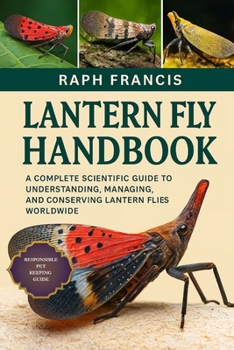
Lantern Fly Handbook: A Complete Scientific Guide to Understanding, Managing, and Conserving Lantern Flies Worldwide

The Lantern Fly Handbook is a groundbreaking scientific and educational guide that explores the remarkable biology, ecology, and global significance of one of the world's most fascinating yet challenging insect groups-the lantern flies (family Fulgoridae). Written with professional depth and academic clarity, this comprehensive volume unites evolutionary science, modern entomology, and sustainable management practices into a single, authoritative resource for researchers, educators, students, and environmentally conscious readers.
From their luminous wings and intricate snout structures to their emerging role as invasive agricultural pests, lantern flies embody both nature's artistry and the complexities of human-environment interactions. This handbook delves into every dimension of their existence-taxonomy, anatomy, ecology, symbiosis, genetics, and behavioral adaptations-while connecting these themes to cutting-edge research in genomics, artificial intelligence, and biological control innovation.
Readers will journey through chapters that illuminate how modern technologies-remote sensing, eDNA analysis, GIS habitat modeling, and AI-driven image recognition-are revolutionizing entomological research and biosecurity monitoring. The book highlights global efforts in citizen science, showcasing platforms like iNaturalist and EDDMapS that empower ordinary people to participate in scientific discovery and invasive species control. It also examines the ethics of ecological stewardship, promoting coexistence through education, sustainability, and community engagement.
Key topics include:
The evolutionary origins and global diversity of lantern flies.
Anatomical and physiological adaptations that define their unique beauty and ecological function.
Life cycle, reproductive behavior, and symbiotic relationships vital to their survival.
Invasive species dynamics and integrated pest management (IPM) strategies.
Modern research innovations in genomics, microbiome manipulation, and predictive climate modeling.
Citizen participation and educational outreach as foundations for global conservation.
Future directions in ecological ethics, biosecurity, and sustainable coexistence.
Blending meticulous scientific explanation with accessible, real-world relevance, the Lantern Fly Handbook goes beyond traditional entomology. It provides a visionary framework for global ecological stewardship, emphasizing collaboration between science, policy, and public awareness to safeguard biodiversity in an era of rapid environmental change.
Whether you are an entomologist, conservationist, educator, student, or simply a lover of nature and science, this handbook offers the ultimate insight into how a single insect species can teach humanity the value of balance, foresight, and responsibility in managing our shared planet.
Discover the story of the lantern fly-not just as an insect, but as a symbol of resilience, adaptation, and the luminous path toward ecological harmony.
Customer Reviews
ThriftBooks® and the ThriftBooks® logo are registered trademarks of Thrift Books Global, LLC
