


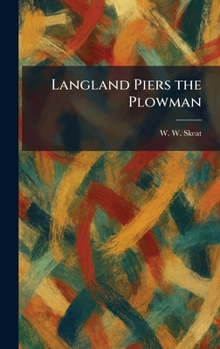
Langland Piers the Plowman

"Langland Piers the Plowman" is a masterpiece of Middle English literature, standing alongside the works of Chaucer as a vital pillar of the 14th-century literary canon. This allegorical narrative poem, attributed to William Langland, recounts the spiritual and social journey of a dreamer named Will. As Will seeks to understand the meaning of a "truthful" life, he encounters a series of vivid visions that critique the corruption of the church and the failings of the state while exploring the theological virtues necessary for salvation.
This version of the text, edited by the influential philologist W.W. Skeat, highlights the work's significant use of alliterative verse and its deep engagement with the social realities of its time. The figure of "Piers Plowman" emerges as a symbol of honest labor and Christ-like humility, providing a moral compass for a society in flux. Rich in symbolism and stinging in its satire, the work offers an unparalleled look at the medieval worldview, blending intense religious devotion with a pragmatic concern for the poor. It remains a foundational text for scholars of history, literature, and theology alike, capturing the complex spirit of the late Middle Ages.
This work has been selected by scholars as being culturally important, and is part of the knowledge base of civilization as we know it. This work was reproduced from the original artifact, and remains as true to the original work as possible. Therefore, you may see the original copyright references, library stamps (as most of these works have been housed in our most important libraries around the world), and other notations in the work.
This work is in the public domain in the United States of America, and possibly other nations. Within the United States, you may freely copy and distribute this work, as no entity (individual or corporate) has a copyright on the body of the work.
As a reproduction of a historical artifact, this work may contain missing or blurred pages, poor pictures, errant marks, etc. Scholars believe, and we concur, that this work is important enough to be preserved, reproduced, and made generally available to the public. We appreciate your support of the preservation process, and thank you for being an important part of keeping this knowledge alive and relevant.
Customer Reviews
ThriftBooks ® and the ThriftBooks ® logo are registered trademarks of Thrift Books Global, LLC
