


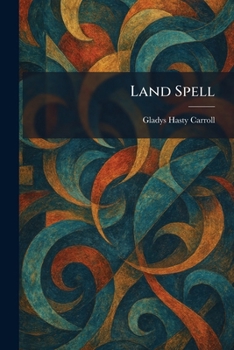
Land Spell

"Land Spell" is a compelling work of regional fiction that captures the essence of rural life in the early 20th century. Written by the acclaimed author Gladys Hasty Carroll, this novel explores the deep-rooted connection between a family and the land they cultivate. Set against the backdrop of the New England landscape, the story delves into the daily struggles, quiet triumphs, and enduring traditions of those whose lives are governed by the changing seasons and the demands of the soil.
The narrative focuses on the internal and external pressures facing a farming household, portraying the resilience required to maintain a livelihood in a shifting world. Carroll's evocative prose brings to life the sights, sounds, and textures of the countryside, making the farm itself a central character in the drama. Through its exploration of kinship and heritage, "Land Spell" offers a poignant look at the values that define American rural identity. This work stands as a testament to the literary tradition of regionalism, providing readers with an authentic and moving depiction of a way of life that shaped the cultural fabric of the nation.
This work has been selected by scholars as being culturally important, and is part of the knowledge base of civilization as we know it. This work was reproduced from the original artifact, and remains as true to the original work as possible. Therefore, you may see the original copyright references, library stamps (as most of these works have been housed in our most important libraries around the world), and other notations in the work.
This work is in the public domain in the United States of America, and possibly other nations. Within the United States, you may freely copy and distribute this work, as no entity (individual or corporate) has a copyright on the body of the work.
As a reproduction of a historical artifact, this work may contain missing or blurred pages, poor pictures, errant marks, etc. Scholars believe, and we concur, that this work is important enough to be preserved, reproduced, and made generally available to the public. We appreciate your support of the preservation process, and thank you for being an important part of keeping this knowledge alive and relevant.
Customer Reviews
ThriftBooks ® and the ThriftBooks ® logo are registered trademarks of Thrift Books Global, LLC
