


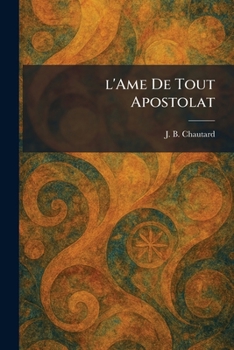
L'Ame De Tout Apostolat

"L' ‚me de tout apostolat" is a profound examination of the vital connection between an individual's inner spiritual life and their outward religious activities. Written by the Trappist monk Dom Jean-Baptiste Chautard, this classic work addresses the fundamental principle that for any apostolic work to be truly fruitful, it must flow from a deep well of prayer and personal union with God. Chautard warns against the "heresy of action," which is the tendency to prioritize external projects and administrative tasks at the expense of one's own spiritual health.
The text offers a compelling guide for clergy, religious, and laity alike, detailing how to cultivate a robust interior life that can sustain and animate the "apostolate." Through insights into the necessity of grace and the pitfalls of spiritual vanity, the work emphasizes that the effectiveness of one's mission is directly proportional to their intimacy with the Divine. A favorite of several popes and spiritual directors, "L' ‚me de tout apostolat" serves as an enduring roadmap for those seeking to balance the demands of the world with the quiet requirements of faith, ensuring that the soul remains the driving force behind every deed of service.
This work has been selected by scholars as being culturally important, and is part of the knowledge base of civilization as we know it. This work was reproduced from the original artifact, and remains as true to the original work as possible. Therefore, you may see the original copyright references, library stamps (as most of these works have been housed in our most important libraries around the world), and other notations in the work.
This work is in the public domain in the United States of America, and possibly other nations. Within the United States, you may freely copy and distribute this work, as no entity (individual or corporate) has a copyright on the body of the work.
As a reproduction of a historical artifact, this work may contain missing or blurred pages, poor pictures, errant marks, etc. Scholars believe, and we concur, that this work is important enough to be preserved, reproduced, and made generally available to the public. We appreciate your support of the preservation process, and thank you for being an important part of keeping this knowledge alive and relevant.
Customer Reviews
ThriftBooks ® and the ThriftBooks ® logo are registered trademarks of Thrift Books Global, LLC
