


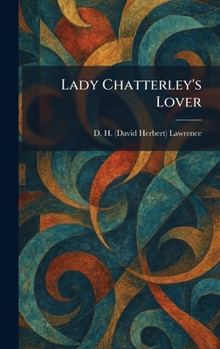
Lady Chatterley's Lover

"Lady Chatterley's Lover" is a seminal work of 20th-century literature that explores the complexities of human desire and the rigid boundaries of the British class system. The novel follows the life of Constance Chatterley, a young woman whose marriage to an aristocratic landowner, Sir Clifford, has become emotionally and physically cold following his paralyzing injuries in the Great War. Seeking a sense of vitality and true connection, Constance finds herself drawn to Oliver Mellors, the estate's stoic and independent gamekeeper.
Through their passionate and forbidden affair, D. H. Lawrence examines the deep-seated tension between the intellectual life and the physical self. The narrative serves as a powerful critique of the dehumanizing effects of industrialization and the stifling social conventions of the era. By juxtaposing the sterile world of the upper class with the raw, natural surroundings of the forest, Lawrence creates a profound meditation on the need for authenticity and the healing power of physical intimacy. "Lady Chatterley's Lover" remains a landmark of literary modernism, celebrated for its bold exploration of sexuality and its enduring lyrical beauty.
This work has been selected by scholars as being culturally important, and is part of the knowledge base of civilization as we know it. This work was reproduced from the original artifact, and remains as true to the original work as possible. Therefore, you may see the original copyright references, library stamps (as most of these works have been housed in our most important libraries around the world), and other notations in the work.
This work is in the public domain in the United States of America, and possibly other nations. Within the United States, you may freely copy and distribute this work, as no entity (individual or corporate) has a copyright on the body of the work.
As a reproduction of a historical artifact, this work may contain missing or blurred pages, poor pictures, errant marks, etc. Scholars believe, and we concur, that this work is important enough to be preserved, reproduced, and made generally available to the public. We appreciate your support of the preservation process, and thank you for being an important part of keeping this knowledge alive and relevant.
Customer Reviews
ThriftBooks ® and the ThriftBooks ® logo are registered trademarks of Thrift Books Global, LLC
