


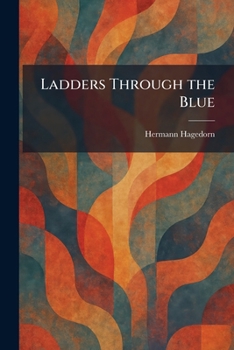
Ladders Through the Blue

"Ladders Through the Blue" is a profound collection of lyrical poetry by the acclaimed American writer Hermann Hagedorn. Within these pages, Hagedorn explores the intricate relationship between the human soul and the vast, often unseen, spiritual landscape. The verses resonate with a quiet intensity, capturing moments of transcendence and the persistent longing for higher truths. Through evocative imagery and rhythmic precision, the collection traverses themes of nature's enduring beauty, the complexities of faith, and the quiet dignity found in the human struggle toward the light.
Hagedorn's mastery of form and emotion is on full display as he crafts poems that are both intimate and universal. Whether reflecting on the passage of time or the silent majesty of the natural world, "Ladders Through the Blue" offers readers a contemplative space for reflection. This work stands as a testament to the early 20th-century American poetic tradition, blending classical sensitivity with a modern search for meaning. For those drawn to poetry that speaks to the spirit's ascent and the symbolic ladders we build toward understanding, this collection remains a poignant and timeless achievement in verse.
This work has been selected by scholars as being culturally important, and is part of the knowledge base of civilization as we know it. This work was reproduced from the original artifact, and remains as true to the original work as possible. Therefore, you may see the original copyright references, library stamps (as most of these works have been housed in our most important libraries around the world), and other notations in the work.
This work is in the public domain in the United States of America, and possibly other nations. Within the United States, you may freely copy and distribute this work, as no entity (individual or corporate) has a copyright on the body of the work.
As a reproduction of a historical artifact, this work may contain missing or blurred pages, poor pictures, errant marks, etc. Scholars believe, and we concur, that this work is important enough to be preserved, reproduced, and made generally available to the public. We appreciate your support of the preservation process, and thank you for being an important part of keeping this knowledge alive and relevant.
Related Subjects
PoetryCustomer Reviews
ThriftBooks ® and the ThriftBooks ® logo are registered trademarks of Thrift Books Global, LLC
