


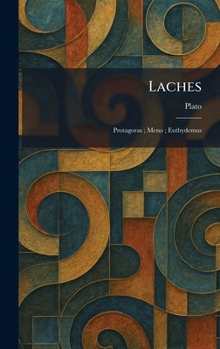
Laches: Protagoras; Meno; Euthydemus

In this collection of foundational Socratic dialogues, Plato explores the core tenets of ethics, virtue, and the pursuit of knowledge. "Laches", "Protagoras", "Meno", and "Euthydemus" represent some of the most influential works in Western philosophy, capturing the intellectual rigor and dramatic flair of Socrates as he engages with the leading minds of Athens.
In "Laches", the nature of courage is examined through a discussion with two prominent Athenian generals. "Protagoras" shifts the focus to the sophists, debating whether virtue can be taught and examining the relationship between different forms of excellence. "Meno" introduces the famous paradox of inquiry and the theory of recollection, famously attempting to define virtue itself. Finally, "Euthydemus" provides a sharp, often humorous critique of eristic reasoning and logical fallacies, contrasting superficial cleverness with the genuine search for wisdom.
Together, these dialogues provide a comprehensive introduction to the Socratic method and the enduring philosophical questions that continue to shape human thought. This volume is an essential resource for students of classical literature, ancient history, and moral philosophy, offering a direct window into the origins of the Western intellectual tradition.
This work has been selected by scholars as being culturally important, and is part of the knowledge base of civilization as we know it. This work was reproduced from the original artifact, and remains as true to the original work as possible. Therefore, you may see the original copyright references, library stamps (as most of these works have been housed in our most important libraries around the world), and other notations in the work.
This work is in the public domain in the United States of America, and possibly other nations. Within the United States, you may freely copy and distribute this work, as no entity (individual or corporate) has a copyright on the body of the work.
As a reproduction of a historical artifact, this work may contain missing or blurred pages, poor pictures, errant marks, etc. Scholars believe, and we concur, that this work is important enough to be preserved, reproduced, and made generally available to the public. We appreciate your support of the preservation process, and thank you for being an important part of keeping this knowledge alive and relevant.
Related Subjects
PhilosophyCustomer Reviews
ThriftBooks ® and the ThriftBooks ® logo are registered trademarks of Thrift Books Global, LLC
