


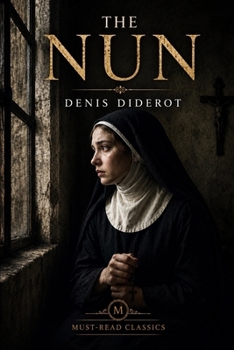
The Nun


Select Format
Select Condition 
Book Overview
The Nun (La Religieuse), published posthumously in 1796, is one of Denis Diderot's most powerful and controversial novels. Written during the Enlightenment, the book is a gripping critique of religious institutions and the social forces that denied many women control over their own lives.
The novel tells the story of Suzanne Simonin, a young woman who is forced by her family to take religious vows and enter a convent against her will. Determined to preserve her freedom and personal integrity, Suzanne struggles against the rigid rules, emotional manipulation, and abuses of authority she encounters within the convent walls. As she moves between different religious houses, she experiences a range of treatment-from cold indifference and harsh discipline to unhealthy obsession and psychological torment.
Narrated as Suzanne's personal memoir, the novel offers an intimate and emotionally compelling account of a woman trapped by circumstances beyond her control. Diderot portrays her as intelligent, courageous, and deeply human, allowing readers to witness her growing despair as well as her unwavering desire for freedom. Through her story, he exposes the dangers of coercion, hypocrisy, and institutions that place obedience above individual conscience.
While The Nun is often remembered for its criticism of convent life, its themes extend far beyond religion. The novel explores personal liberty, women's rights, social injustice, family pressure, and the conflict between individual identity and institutional authority. Diderot challenges readers to question traditions and systems that restrict human dignity and self-determination.
Combining psychological insight, social criticism, and compelling storytelling, The Nun remains one of the most significant works of eighteenth-century French literature. Its exploration of freedom, oppression, and the struggle for personal autonomy continues to resonate with modern readers, making it a timeless classic of the Enlightenment era.
Customer Reviews
Mysterious red stain
Wrong language:(
An ode to freedom
Diderot Blasts the Church Hierarchy
Tommyknockers?
The Nun by Denis Diderot
pretty good
ThriftBooks ® and the ThriftBooks ® logo are registered trademarks of Thrift Books Global, LLC
