


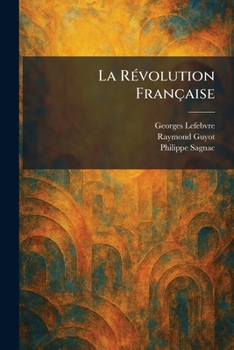
La RÃ(c)volution Française

"La Revolution Francaise" is a magisterial and authoritative exploration of one of the most pivotal eras in modern history. Written by the renowned historians Georges Lefebvre, Raymond Guyot, and Philippe Sagnac, this work provides a comprehensive analysis of the political, social, and economic upheavals that transformed France and the world. The narrative delves into the systemic failures of the Ancien R gime, the rise of Enlightenment ideals, and the dramatic events that led to the fall of the absolute monarchy.
Focusing on the complex interplay of class dynamics and ideological shifts, the authors examine the transition from the Estates-General to the radical period of the Terror and the eventual rise of the Directory. The work provides deep insights into how internal revolutionary fervor collided with external European pressures, reshaping the geopolitical landscape of the continent. By synthesising vast amounts of historical data and primary accounts, the authors offer a nuanced portrait of the figures and movements that defined the struggle for liberty, equality, and fraternity. "La Revolution Francaise" remains an essential text for understanding the foundations of modern democratic governance and the enduring impact of revolutionary change on Western society.
This work has been selected by scholars as being culturally important, and is part of the knowledge base of civilization as we know it. This work was reproduced from the original artifact, and remains as true to the original work as possible. Therefore, you may see the original copyright references, library stamps (as most of these works have been housed in our most important libraries around the world), and other notations in the work.
This work is in the public domain in the United States of America, and possibly other nations. Within the United States, you may freely copy and distribute this work, as no entity (individual or corporate) has a copyright on the body of the work.
As a reproduction of a historical artifact, this work may contain missing or blurred pages, poor pictures, errant marks, etc. Scholars believe, and we concur, that this work is important enough to be preserved, reproduced, and made generally available to the public. We appreciate your support of the preservation process, and thank you for being an important part of keeping this knowledge alive and relevant.
Related Subjects
HistoryCustomer Reviews
ThriftBooks ® and the ThriftBooks ® logo are registered trademarks of Thrift Books Global, LLC
