


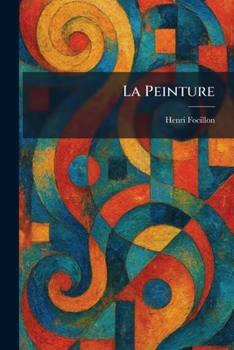
La Peinture

"La Peinture" is an illuminating study of the art of painting, written by the renowned art historian Henri Focillon. This comprehensive work examines the evolution of artistic forms, specifically focusing on the pivotal transformations of the nineteenth and early twentieth centuries. Focillon provides a masterly analysis of the stylistic shifts that moved art from classical traditions into the vibrant experimentation of the modern era.
The text explores the underlying structures and historical context of various movements, from Romanticism and Realism to Impressionism and beyond. Focillon is celebrated for his formalist perspective, and in "La Peinture", he investigates how the internal life of forms dictates the progression of art. He offers profound insights into the techniques and philosophies of influential painters, articulating how their works reflect both individual genius and broader cultural rhythms.
As a foundational text in art history, "La Peinture" offers readers a sophisticated framework for understanding the visual arts. It remains a vital resource for anyone seeking to comprehend the aesthetic and historical complexities of Western painting. This work is distinguished by its intellectual depth and its commitment to seeing art as a living, evolving entity.
This work has been selected by scholars as being culturally important, and is part of the knowledge base of civilization as we know it. This work was reproduced from the original artifact, and remains as true to the original work as possible. Therefore, you may see the original copyright references, library stamps (as most of these works have been housed in our most important libraries around the world), and other notations in the work.
This work is in the public domain in the United States of America, and possibly other nations. Within the United States, you may freely copy and distribute this work, as no entity (individual or corporate) has a copyright on the body of the work.
As a reproduction of a historical artifact, this work may contain missing or blurred pages, poor pictures, errant marks, etc. Scholars believe, and we concur, that this work is important enough to be preserved, reproduced, and made generally available to the public. We appreciate your support of the preservation process, and thank you for being an important part of keeping this knowledge alive and relevant.
Customer Reviews
ThriftBooks ® and the ThriftBooks ® logo are registered trademarks of Thrift Books Global, LLC
