


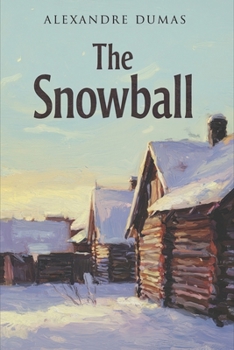
The Snowball: A New Translation

It begins with a snowball. Someone throws it - carelessly, cheerfully, in the spirit of a winter afternoon - and it hits the wrong man. Or perhaps the right man, depending on your view of what follows: a precisely escalating sequence of affronted honor, formal challenges, procedural negotiations, and bruised military dignity that threatens to consume an entire Caucasian garrison over an incident that any reasonable person could resolve in thirty seconds.
The men involved are not unreasonable. They are simply operating according to a code so elaborately refined, so devotedly procedural, so thoroughly insulated from common sense, that reason no longer has any jurisdiction.
The Snowball came directly from Alexandre Dumas' journey through Russia and the Caucasus in 1858-1859, one of the most adventurous undertakings of a life not short on adventure. The region he traveled through was an active military frontier - Russia's long and brutal Caucasian War was still unfinished - and the officer culture he observed there gave him exactly the material his comic instincts required: men of genuine courage and intelligence who had elevated the protocols of personal honor to a pitch of refinement that was, in the end, indistinguishable from farce.
Brief, precise, and quietly devastating, The Snowball is Dumas the social observer at his most relaxed and most lethal - a writer who has been watching men make fools of themselves for thirty years, and has never quite lost his pleasure in it.
Customer Reviews
ThriftBooks ® and the ThriftBooks ® logo are registered trademarks of Thrift Books Global, LLC
