


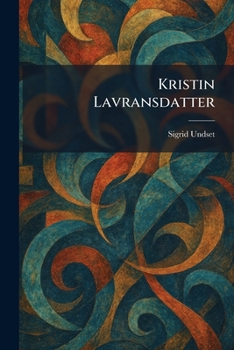
Kristin Lavransdatter

"Kristin Lavransdatter" is a monumental masterpiece of historical fiction that offers a breathtakingly detailed and emotionally profound depiction of life in 14th-century Norway. This sweeping trilogy follows the life of Kristin, a strong-willed woman navigating the complex intersection of personal desire, family duty, and spiritual conviction. From her passionate youth and tumultuous marriage to her later years as a matriarch and her ultimate search for redemption, Kristin's journey provides a window into the human soul against the backdrop of a medieval world transitioning between ancient traditions and Christian faith.
Sigrid Undset's narrative is renowned for its psychological depth and its meticulous recreation of the social, political, and religious landscape of the Middle Ages. The work explores universal themes of love, betrayal, guilt, and the enduring power of faith. Winner of the Nobel Prize in Literature, "Kristin Lavransdatter" remains one of the most celebrated works of the 20th century, praised for its lyrical prose and its uncompromisingly realistic portrayal of a woman's life across the decades. It stands as a timeless exploration of the moral and emotional struggles that define the human experience.
This work has been selected by scholars as being culturally important, and is part of the knowledge base of civilization as we know it. This work was reproduced from the original artifact, and remains as true to the original work as possible. Therefore, you may see the original copyright references, library stamps (as most of these works have been housed in our most important libraries around the world), and other notations in the work.
This work is in the public domain in the United States of America, and possibly other nations. Within the United States, you may freely copy and distribute this work, as no entity (individual or corporate) has a copyright on the body of the work.
As a reproduction of a historical artifact, this work may contain missing or blurred pages, poor pictures, errant marks, etc. Scholars believe, and we concur, that this work is important enough to be preserved, reproduced, and made generally available to the public. We appreciate your support of the preservation process, and thank you for being an important part of keeping this knowledge alive and relevant.
Customer Reviews
ThriftBooks ® and the ThriftBooks ® logo are registered trademarks of Thrift Books Global, LLC
