


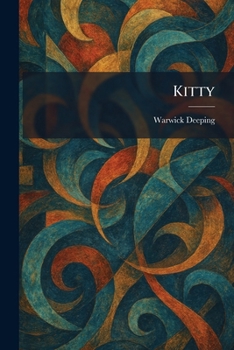
Kitty

"Kitty" is a compelling narrative of love, resilience, and the rigid social structures of post-World War I England. The story centers on Kitty, a spirited young woman whose life becomes intertwined with the aristocratic St. George family through her marriage to Alex St. George, a soldier returning from the front with physical and emotional scars. Kitty finds herself locked in a fierce battle of wills with her formidable mother-in-law, a woman clinging to traditional class distinctions and maternal control who views Kitty as an unsuitable match.
As the couple navigates the difficulties of rebuilding a life in the wake of the Great War, the novel explores the shifting landscape of British society. Warwick Deeping delves into themes of loyalty, the power of persistent love, and the personal transformations required to overcome social adversity and familial strife. His insightful character studies and evocative setting capture the essence of an era in transition, where old-world values clash with the emerging realities of the twentieth century. "Kitty" remains a classic example of early twentieth-century fiction, celebrating the strength of the human spirit in its quest for happiness and personal belonging.
This work has been selected by scholars as being culturally important, and is part of the knowledge base of civilization as we know it. This work was reproduced from the original artifact, and remains as true to the original work as possible. Therefore, you may see the original copyright references, library stamps (as most of these works have been housed in our most important libraries around the world), and other notations in the work.
This work is in the public domain in the United States of America, and possibly other nations. Within the United States, you may freely copy and distribute this work, as no entity (individual or corporate) has a copyright on the body of the work.
As a reproduction of a historical artifact, this work may contain missing or blurred pages, poor pictures, errant marks, etc. Scholars believe, and we concur, that this work is important enough to be preserved, reproduced, and made generally available to the public. We appreciate your support of the preservation process, and thank you for being an important part of keeping this knowledge alive and relevant.
Customer Reviews
ThriftBooks ® and the ThriftBooks ® logo are registered trademarks of Thrift Books Global, LLC
