


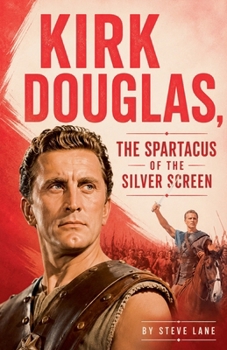
Kirk Douglas, the Spartacus of the Silver Screen

Kirk Douglas occupies a singular place in the history of American cinema, not merely as one of Hollywood's most recognizable leading men, but as a figure whose life and career illuminate the broader cultural, political, and industrial transformations of the twentieth century. His story is inseparable from the mythology of American self-reinvention, the pressures of assimilation, the rise and evolution of the studio system, and the moral crises that shaped Hollywood during the Cold War. Born Issur Danielovitch to impoverished Jewish immigrants, Douglas's ascent from hardship to international stardom embodies the archetypal narrative of the American Dream, yet his trajectory also complicates that myth. His fierce independence, uncompromising artistic vision, and willingness to confront entrenched power structures-most notably in his role in breaking the Hollywood blacklist-reveal a man who did not simply succeed within the system but helped reshape it. As the document notes, his life forms "a sweeping biographical narrative following Kirk Douglas from his impoverished childhood as Issur Danielovitch to his rise as one of Hollywood's most intense and uncompromising leading men," a transformation that demands careful historical and critical examination.
Customer Reviews
ThriftBooks ® and the ThriftBooks ® logo are registered trademarks of Thrift Books Global, LLC
