


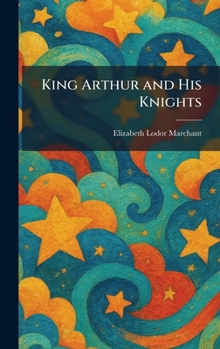
King Arthur and His Knights

"King Arthur and His Knights" is a masterful retelling of the legendary stories surrounding Camelot and its heroic inhabitants. This work delves into the heart of Arthurian lore, capturing the chivalric ideals and mystical adventures that have defined the Western literary imagination for generations.
The narrative follows the ascent of the young Arthur, his guidance by the enigmatic Merlin, and the formation of the fellowship of the Round Table. Within these pages, readers encounter the quintessential tales of bravery and sacrifice, including the quest for the Holy Grail and the legendary exploits of knights such as Sir Lancelot, Sir Galahad, and Sir Gawain. The stories explore the complex relationships and moral dilemmas faced by the King and his companions, set against a backdrop of ancient British landscapes and magical encounters.
Blending history with myth, "King Arthur and His Knights" highlights the enduring values of honor, loyalty, and justice. This collection preserves the grand scale of the original legends while providing a cohesive narrative structure that makes the world of medieval romance accessible to all. It remains an essential exploration of the foundational myths of Britain and the timeless appeal of the Arthurian cycle.
This work has been selected by scholars as being culturally important, and is part of the knowledge base of civilization as we know it. This work was reproduced from the original artifact, and remains as true to the original work as possible. Therefore, you may see the original copyright references, library stamps (as most of these works have been housed in our most important libraries around the world), and other notations in the work.
This work is in the public domain in the United States of America, and possibly other nations. Within the United States, you may freely copy and distribute this work, as no entity (individual or corporate) has a copyright on the body of the work.
As a reproduction of a historical artifact, this work may contain missing or blurred pages, poor pictures, errant marks, etc. Scholars believe, and we concur, that this work is important enough to be preserved, reproduced, and made generally available to the public. We appreciate your support of the preservation process, and thank you for being an important part of keeping this knowledge alive and relevant.
Customer Reviews
ThriftBooks ® and the ThriftBooks ® logo are registered trademarks of Thrift Books Global, LLC
