


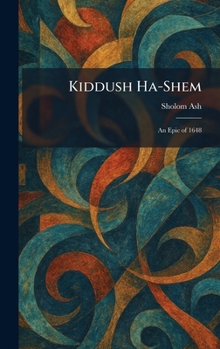
Kiddush Ha-Shem: An Epic of 1648

"Kiddush Ha-Shem an Epic of 1648" is a powerful historical novel that captures one of the most tragic and transformative periods in Jewish history. Set against the backdrop of the Chmielnicki Uprising in 17th-century Poland and Ukraine, the narrative explores the lives of Jewish communities caught in the crossfire of political upheaval and religious persecution. Through vivid storytelling, Sholom Ash depicts the profound struggles, unwavering faith, and ultimate sacrifices made by individuals during these turbulent times.
The work functions as an epic of martyrdom, examining the concept of Kiddush Ha-Shem-the sanctification of the Divine Name through extreme devotion and sacrifice. Ash weaves a tapestry of social and religious life, illustrating the tension between different strata of society and the resilience of a people under siege. This novel is a cornerstone of Jewish literature, offering a poignant reflection on identity, survival, and the enduring strength of the human spirit. Readers will find a deeply moving account that balances historical scope with intimate human drama, providing essential insight into the historical memory of Eastern Europe. It remains a vital exploration of how faith and community endure in the face of overwhelming adversity.
This work has been selected by scholars as being culturally important, and is part of the knowledge base of civilization as we know it. This work was reproduced from the original artifact, and remains as true to the original work as possible. Therefore, you may see the original copyright references, library stamps (as most of these works have been housed in our most important libraries around the world), and other notations in the work.
This work is in the public domain in the United States of America, and possibly other nations. Within the United States, you may freely copy and distribute this work, as no entity (individual or corporate) has a copyright on the body of the work.
As a reproduction of a historical artifact, this work may contain missing or blurred pages, poor pictures, errant marks, etc. Scholars believe, and we concur, that this work is important enough to be preserved, reproduced, and made generally available to the public. We appreciate your support of the preservation process, and thank you for being an important part of keeping this knowledge alive and relevant.
Customer Reviews
ThriftBooks ® and the ThriftBooks ® logo are registered trademarks of Thrift Books Global, LLC
