


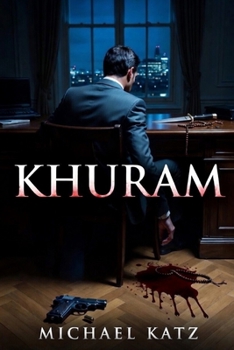
Khuram

London. A spring morning. A door unlocked from the inside. A body in a charcoal suit, facing the window. One round fired from a Walther PPK. The file on Khuram Sharif is closed.
What happened between a dust-choked road outside Lahore and a Mayfair apartment with everything - that is the only thing that matters.
KHURAM traces the rise and fall of a criminal architect who built his empire from the margins of the global economy: hawala networks behind phone-shop counters, Latvian banks scrubbing decades of VAT fraud, Russian oil moving under Palauan flags, drone components routed through Warsaw while sanctioned jet parts crossed through Tbilisi. Khuram Sharif did not deal in violence as a preference. He dealt in structure. The violence was simply overhead.
Moving across London, Karachi, Istanbul, Tbilisi, Budapest, Lviv, Riga and Whitechapel, the novel follows a man who remained invisible for forty years - until a woman named Natasha, booked into a Fatih hotel six days before their first "chance" encounter, began reading him page by page, all the way through, until the author forgot who held the pen.
From the author of Ayatollah Is Dead, - a book about men who built empires from the dirt, using the only tools the world saw fit to give them.
Customer Reviews
ThriftBooks ® and the ThriftBooks ® logo are registered trademarks of Thrift Books Global, LLC
