


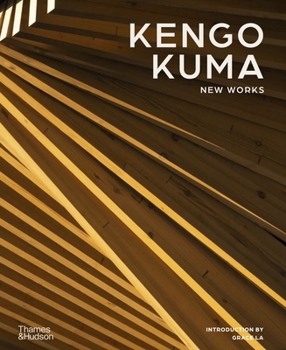
Kengo Kuma: New Works

Kengo Kuma is one of Japan's leading architects and professor emeritus at the University of Tokyo. A prolific writer and philosopher, he proposes architecture that introduces new relationships between nature, technology, and human beings. This book, Kuma's second monograph following Kengo Kuma: Complete Works, surveys forty projects arranged according to building use, with a timely focus on those that respond to natural disasters and the pandemic, build on the importance of local communities, and address our need to come together with others.
The projects range in scale and ambition, from Japan's Olympic Stadium--where Kuma used timber from every region in the country to build the nation's largest arena--to a small community center in Yusuhara, and a fairytale museum in Denmark. Each celebrates Kuma's skill using natural materials, as he pushes them to their limits to create exciting and surprising forms. Take for instance, The Exchange, a community center in Sydney, which has wooden "threads" which wrap around the building, giving the impression of a bird's nest and the UCCA Clay Museum in Yixing, China, with an undulating organic form that mimics a mountain, covered with 3,600 handmade, clay terracotta tiles.
In the book's introductory essay, designer and Harvard University professor Grace La considers Kuma's evolution since his previous monograph and explores the themes of his work and how they relate to the architecture world today. The projects included in Kengo Kuma: New Works--stadiums and cultural centers, museums and houses, caf s and parks, temples and pavilions--have been chosen by Kuma himself as best representative of this stage in his career. None appear in his previous book.
Related Subjects
ArchitectureCustomer Reviews
ThriftBooks ® and the ThriftBooks ® logo are registered trademarks of Thrift Books Global, LLC
