


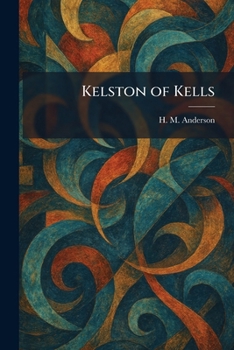
Kelston of Kells

"Kelston of Kells" is a gripping historical novel set against the rugged and tumultuous landscape of 14th-century Scotland. This work captures the spirit of the Scottish Middle Ages through the eyes of its compelling protagonist, Kelston. As a tale of chivalry, loyalty, and high adventure, the narrative follows Kelston's journey through a land torn by strife, where the boundaries between friend and foe are as shifting as the mist on the Galloway hills.
The novel excels in its vivid recreation of medieval life, blending meticulous historical detail with a sweeping romantic sensibility. Readers are transported to an era of castles, clan rivalries, and the fierce quest for identity and honor. Through Kelston's trials and triumphs, the book explores timeless themes of sacrifice and devotion, making it a significant example of early 20th-century historical fiction. "Kelston of Kells" remains an evocative exploration of the Scottish spirit and a testament to the enduring power of historical storytelling. It is a rewarding read for those fascinated by the heritage of the British Isles and the legendary figures that inhabit its past.
This work has been selected by scholars as being culturally important, and is part of the knowledge base of civilization as we know it. This work was reproduced from the original artifact, and remains as true to the original work as possible. Therefore, you may see the original copyright references, library stamps (as most of these works have been housed in our most important libraries around the world), and other notations in the work.
This work is in the public domain in the United States of America, and possibly other nations. Within the United States, you may freely copy and distribute this work, as no entity (individual or corporate) has a copyright on the body of the work.
As a reproduction of a historical artifact, this work may contain missing or blurred pages, poor pictures, errant marks, etc. Scholars believe, and we concur, that this work is important enough to be preserved, reproduced, and made generally available to the public. We appreciate your support of the preservation process, and thank you for being an important part of keeping this knowledge alive and relevant.
Customer Reviews
ThriftBooks ® and the ThriftBooks ® logo are registered trademarks of Thrift Books Global, LLC
