


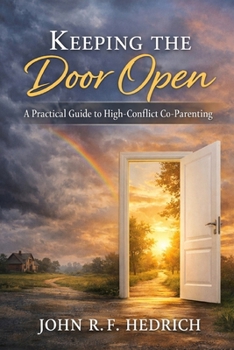
Keeping the Door Open: A Practical Guide to High-Conflict Co-parenting

Keeping the Door Open is a practical field guide for parents who feel like their child is being pulled between homes like a rope in a storm. If co-parenting has turned into conflict, accusations, sudden schedule chaos, or a child who seems distant or scripted, this book helps you stay grounded without becoming a mirror image of the chaos you're fighting.
This isn't about winning a war with your ex. It's about protecting your child's emotional safety and protecting your bond over time. You'll learn to recognize the spectrum from ordinary post-separation friction to loyalty binds and cutoff patterns, using observable behavior and child impact rather than paranoia or amateur diagnosis. You'll build a simple pattern map and a neutral tracker that keeps you clear-headed and credible, without turning your life into a surveillance hobby.
At the center of the book is a calm, repeatable loop you can use on the hard days: S.A.F.E.
Spot the pattern (reality-check without accusation), Avoid the bait (refuse escalation traps), Feed the bond (connection deposits that survive weather), and Empty your stress bucket (recover so you don't leak distress onto your child). Each chapter returns to this loop so you're never stuck wondering, "Okay, but what do I do next?"
You'll get moment-to-moment scripts for the toughest scenes: last-minute "they don't want to come" messages, silent car rides, cold shoulders, rejection, and borrowed certainty. You'll learn how to set boundaries that reduce chaos without lighting the house on fire, how to communicate in a way that's boring and hard to twist, and how to repair without putting your child on trial. The book also covers responsible documentation, building a support stack with the right professionals, and a recovery plan for the targeted parent's emotional storm: grief, rage, panic, and obsession.
Keeping the Door Open offers realistic hope without guarantees. The long game is simple and hard: stay calm, stay credible, stay warm, stay ready. The tug-of-war ends when your child no longer feels required to pull, and this book shows you how to keep your door open without losing yourself.
*(Note: This book is educational and not a substitute for legal or clinical advice. If you believe a child is at risk of harm, seek qualified professional guidance and follow local safety procedures.)
Customer Reviews
ThriftBooks® and the ThriftBooks® logo are registered trademarks of Thrift Books Global, LLC
