


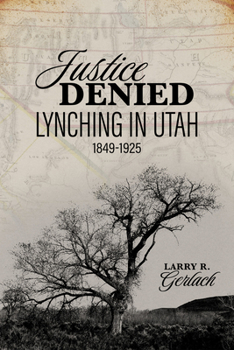
Justice Denied: Lynching in Utah, 1849-1925

A history of lynching in Utah
In Justice Denied: Lynching in Utah, 1849-1925, Larry Gerlach argues that, though lynching is associated with the American South, vigilante movements were most common in the American West. Despite an emphasis on law and order in Utah's Mormon-dominated towns, individuals took it upon themselves to impose their sense of justice. Groups of citizens formed vigilante committees, taking the law into their own hands to advance special interests, expedite the judicial process of persons known or believed to be guilty of a crime, or punish those whose conduct countered community interests or values. While the identities of lynchers were usually well-known, law enforcement officials typically refused to do their duty and arrest those responsible for murder, and members of the community kept silent, ignoring their civic, ethical, and moral responsibilities.
In an effort to acknowledge this history of injustice and remember the victims as more than just names in historical records, Gerlach documents the lives and deaths of sixteen individuals, all but one murdered in the second half of the nineteenth century. Through years of research and careful analysis of historical records, Gerlach reconstructs these stories, determined to set the record straight.
Customer Reviews
ThriftBooks ® and the ThriftBooks ® logo are registered trademarks of Thrift Books Global, LLC
