


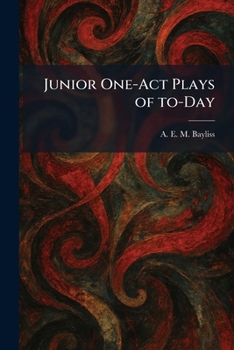
Junior One-Act Plays of To-Day

"Junior One-Act Plays of to-Day" is a curated collection of dramatic works specifically chosen for their appeal and accessibility to younger performers and audiences. Edited by A. E. M. Bayliss, this anthology brings together a diverse range of short plays that explore various themes, from the whimsical and humorous to the adventurous and educational. Each piece is designed to be performed within a single act, making them ideal for school productions, amateur theatre groups, and classroom readings.
The collection showcases the vitality of the early 20th-century dramatic landscape, featuring works that emphasize character development, engaging dialogue, and clear narrative structures. By providing a platform for youth to engage with the performing arts, these plays encourage creative expression and the development of public speaking and collaborative skills. The variety of settings and plots ensures that there is something to capture the imagination of every reader and performer.
This volume serves as an excellent resource for those interested in the history of educational theatre and the evolution of drama for children and young adults. "Junior One-Act Plays of to-Day" remains a testament to the enduring power of the stage to entertain and inspire the next generation of performers.
This work has been selected by scholars as being culturally important, and is part of the knowledge base of civilization as we know it. This work was reproduced from the original artifact, and remains as true to the original work as possible. Therefore, you may see the original copyright references, library stamps (as most of these works have been housed in our most important libraries around the world), and other notations in the work.
This work is in the public domain in the United States of America, and possibly other nations. Within the United States, you may freely copy and distribute this work, as no entity (individual or corporate) has a copyright on the body of the work.
As a reproduction of a historical artifact, this work may contain missing or blurred pages, poor pictures, errant marks, etc. Scholars believe, and we concur, that this work is important enough to be preserved, reproduced, and made generally available to the public. We appreciate your support of the preservation process, and thank you for being an important part of keeping this knowledge alive and relevant.
Related Subjects
DramaCustomer Reviews
ThriftBooks ® and the ThriftBooks ® logo are registered trademarks of Thrift Books Global, LLC
