


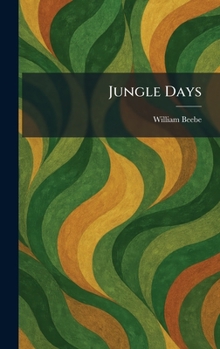
Jungle Days

"Jungle Days" is a captivating collection of essays by renowned naturalist and explorer William Beebe, offering a profound glimpse into the vibrant ecosystem of the South American tropical rainforest. Set primarily at a research station in British Guiana, this work captures the intricate beauty and raw complexity of the jungle through the eyes of a master observer. Beebe delves into the hidden lives of various creatures-from the slow-moving sloth to the teeming world of ants and the exotic plumage of tropical birds-weaving scientific observation with poetic prose.
The book serves as a classic of natural history literature, blending the rigors of field research with a deep philosophical appreciation for the interconnectedness of life. Beebe's narrative style brings the dense undergrowth and canopy alive, making the strange and wonderful inhabitants of the jungle accessible to the general reader. Each chapter functions as an independent exploration of the sights, sounds, and rhythms of the wilderness, reflecting a time when the world's remote regions still held vast mysteries. "Jungle Days" remains a testament to the wonder of discovery and the enduring importance of observing the natural world, appealing to anyone fascinated by biology, travel, and the art of the nature essay.
This work has been selected by scholars as being culturally important, and is part of the knowledge base of civilization as we know it. This work was reproduced from the original artifact, and remains as true to the original work as possible. Therefore, you may see the original copyright references, library stamps (as most of these works have been housed in our most important libraries around the world), and other notations in the work.
This work is in the public domain in the United States of America, and possibly other nations. Within the United States, you may freely copy and distribute this work, as no entity (individual or corporate) has a copyright on the body of the work.
As a reproduction of a historical artifact, this work may contain missing or blurred pages, poor pictures, errant marks, etc. Scholars believe, and we concur, that this work is important enough to be preserved, reproduced, and made generally available to the public. We appreciate your support of the preservation process, and thank you for being an important part of keeping this knowledge alive and relevant.
Customer Reviews
ThriftBooks ® and the ThriftBooks ® logo are registered trademarks of Thrift Books Global, LLC
