


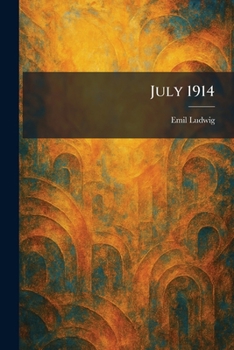
July 1914

"July 1914" is a masterfully crafted historical narrative that examines the tense weeks leading up to the outbreak of the First World War. Written by the renowned biographer Emil Ludwig, this work provides a psychological and diplomatic study of the European leaders and the political climate during the fateful month of July 1914. Through a detailed analysis of telegrams, conversations, and state documents, Ludwig reconstructs the chain of events that transformed a regional conflict in the Balkans into a global catastrophe.
The book delves into the motivations and personalities of key figures, including the Kaiser, the Tsar, and various diplomats, portraying them not as mere symbols of power but as individuals caught in a rapidly escalating crisis. Ludwig explores the intricate web of alliances, the failures of communication, and the mounting pressure that eventually led to mobilization. "July 1914" stands as a significant contribution to the understanding of war origins, offering a compelling look at how human decisions and misunderstandings can shape the course of history. Its focus on the human element within the machinery of statecraft makes it an enduring classic for students of history and general readers alike.
This work has been selected by scholars as being culturally important, and is part of the knowledge base of civilization as we know it. This work was reproduced from the original artifact, and remains as true to the original work as possible. Therefore, you may see the original copyright references, library stamps (as most of these works have been housed in our most important libraries around the world), and other notations in the work.
This work is in the public domain in the United States of America, and possibly other nations. Within the United States, you may freely copy and distribute this work, as no entity (individual or corporate) has a copyright on the body of the work.
As a reproduction of a historical artifact, this work may contain missing or blurred pages, poor pictures, errant marks, etc. Scholars believe, and we concur, that this work is important enough to be preserved, reproduced, and made generally available to the public. We appreciate your support of the preservation process, and thank you for being an important part of keeping this knowledge alive and relevant.
Related Subjects
HistoryCustomer Reviews
ThriftBooks ® and the ThriftBooks ® logo are registered trademarks of Thrift Books Global, LLC
