


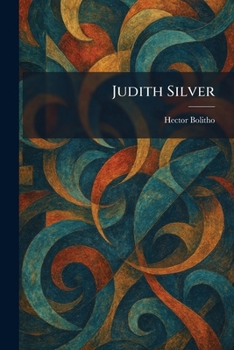
Judith Silver

"Judith Silver" is a poignant and introspective novel by Hector Bolitho that delves into the complex psychological landscape of family bonds and the struggle for personal identity. Set against the backdrop of early 20th-century England and Scotland, the narrative focuses on the intense and often suffocating relationship between a father, James Silver, and his son, Nicholas. While the titular Judith Silver remains a lingering presence in their lives, the story primarily explores James's obsessive devotion to his son and the emotional toll it takes on Nicholas as he attempts to carve out his own path at Cambridge and beyond.
Bolitho's prose captures the nuances of domestic life and the silent tensions that define familial expectations. Through evocative descriptions and sensitive character development, the work examines themes of independence, loyalty, and the burden of parental love. "Judith Silver" stands as a significant example of early 20th-century fiction, offering readers a deep dive into the vulnerabilities of the human heart and the difficult journey toward self-discovery. This masterfully crafted drama remains a compelling study of character and the enduring impact of the past on the present.
This work has been selected by scholars as being culturally important, and is part of the knowledge base of civilization as we know it. This work was reproduced from the original artifact, and remains as true to the original work as possible. Therefore, you may see the original copyright references, library stamps (as most of these works have been housed in our most important libraries around the world), and other notations in the work.
This work is in the public domain in the United States of America, and possibly other nations. Within the United States, you may freely copy and distribute this work, as no entity (individual or corporate) has a copyright on the body of the work.
As a reproduction of a historical artifact, this work may contain missing or blurred pages, poor pictures, errant marks, etc. Scholars believe, and we concur, that this work is important enough to be preserved, reproduced, and made generally available to the public. We appreciate your support of the preservation process, and thank you for being an important part of keeping this knowledge alive and relevant.
Customer Reviews
ThriftBooks ® and the ThriftBooks ® logo are registered trademarks of Thrift Books Global, LLC
