


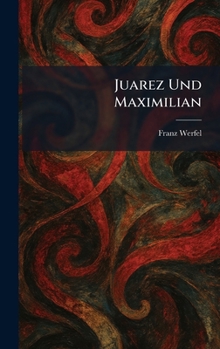
Juarez Und Maximilian

"Juarez Und Maximilian" is a compelling historical drama by Franz Werfel that captures the tragic struggle for the soul of Mexico in the mid-19th century. The play centers on the ill-fated reign of Archduke Maximilian of Austria, who was installed as Emperor of Mexico by Napoleon III, and his inevitable clash with the Mexican revolutionary leader Benito Ju rez. Werfel masterfully portrays the ideological divide between the fading traditions of European monarchy and the rising tide of republicanism and national independence.
The narrative provides a nuanced psychological portrait of Maximilian, depicting him as a man of high ideals and cultural refinement who finds himself out of place in a land demanding radical change. While Ju rez remains a symbol of the desert and the indigenous resistance, the play focuses on the human dimensions of the conflict, exploring themes of betrayal, duty, and the burden of leadership. This work is celebrated for its poetic intensity and its insightful examination of the political forces that shaped modern Mexico. "Juarez Und Maximilian" stands as a significant contribution to 20th-century literature, offering a timeless meditation on the complexities of power and the tragic nature of history.
This work has been selected by scholars as being culturally important, and is part of the knowledge base of civilization as we know it. This work was reproduced from the original artifact, and remains as true to the original work as possible. Therefore, you may see the original copyright references, library stamps (as most of these works have been housed in our most important libraries around the world), and other notations in the work.
This work is in the public domain in the United States of America, and possibly other nations. Within the United States, you may freely copy and distribute this work, as no entity (individual or corporate) has a copyright on the body of the work.
As a reproduction of a historical artifact, this work may contain missing or blurred pages, poor pictures, errant marks, etc. Scholars believe, and we concur, that this work is important enough to be preserved, reproduced, and made generally available to the public. We appreciate your support of the preservation process, and thank you for being an important part of keeping this knowledge alive and relevant.
Customer Reviews
ThriftBooks ® and the ThriftBooks ® logo are registered trademarks of Thrift Books Global, LLC
