


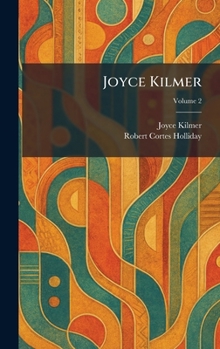
Joyce Kilmer

"Joyce Kilmer" Volume 2 is a poignant collection of prose, essays, and personal correspondence from one of the most celebrated American writers of the early 20th century. While best remembered for the enduring poem "Trees," Kilmer was a prolific journalist and man of letters whose work spanned a wide range of social, religious, and literary topics. This volume offers a deep exploration of his intellectual life and provides a more complete portrait of the artist beyond his famous verses.
The collection showcases Kilmer's mastery of the essay form, characterized by wit, spiritual conviction, and a keen observation of everyday life. As a prominent figure in the Catholic literary revival and a dedicated soldier who lost his life during World War I, Kilmer's writings reflect the values and tensions of an era in transition. Through his letters and prose, readers gain insight into his professional journey, his commitment to his craft, and the personal sacrifices he made on the battlefields of France. "Joyce Kilmer" serves as an essential tribute to the legacy of a soldier-poet whose voice continues to represent the courage and idealism of a generation.
This work has been selected by scholars as being culturally important, and is part of the knowledge base of civilization as we know it. This work was reproduced from the original artifact, and remains as true to the original work as possible. Therefore, you may see the original copyright references, library stamps (as most of these works have been housed in our most important libraries around the world), and other notations in the work.
This work is in the public domain in the United States of America, and possibly other nations. Within the United States, you may freely copy and distribute this work, as no entity (individual or corporate) has a copyright on the body of the work.
As a reproduction of a historical artifact, this work may contain missing or blurred pages, poor pictures, errant marks, etc. Scholars believe, and we concur, that this work is important enough to be preserved, reproduced, and made generally available to the public. We appreciate your support of the preservation process, and thank you for being an important part of keeping this knowledge alive and relevant.
Customer Reviews
ThriftBooks ® and the ThriftBooks ® logo are registered trademarks of Thrift Books Global, LLC
