


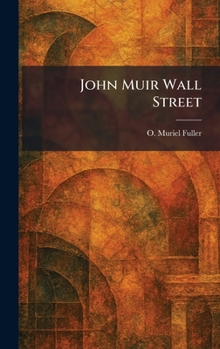
John Muir Wall Street

"John Muir Wall Street" provides a fascinating account of the life and career of John Muir, a transformative figure in the American financial landscape of the early twentieth century. As the founder of the influential brokerage firm John Muir & Co., Muir was instrumental in changing the way the public interacted with the stock market. This work explores his professional journey and his pioneering efforts to democratize investing.
The book details Muir's innovative introduction of "odd-lot" trading and installment plans, which allowed individual investors of modest means to participate in the New York Stock Exchange for the first time. By breaking down the barriers to entry that had previously restricted market access to the very wealthy, Muir played a crucial role in the expansion of American capitalism. The narrative captures the vibrant energy of Wall Street during the 1920s and illustrates the strategic vision required to navigate the complexities of a rapidly evolving financial world.
Serving as both a business biography and a historical study, "John Muir Wall Street" offers valuable insights into the evolution of retail brokerage and the development of modern investment practices. It highlights the ambition, ethics, and economic impact of a man who saw potential in the small investor, making it an essential read for those interested in financial history and the pioneers of the American economy.
This work has been selected by scholars as being culturally important, and is part of the knowledge base of civilization as we know it. This work was reproduced from the original artifact, and remains as true to the original work as possible. Therefore, you may see the original copyright references, library stamps (as most of these works have been housed in our most important libraries around the world), and other notations in the work.
This work is in the public domain in the United States of America, and possibly other nations. Within the United States, you may freely copy and distribute this work, as no entity (individual or corporate) has a copyright on the body of the work.
As a reproduction of a historical artifact, this work may contain missing or blurred pages, poor pictures, errant marks, etc. Scholars believe, and we concur, that this work is important enough to be preserved, reproduced, and made generally available to the public. We appreciate your support of the preservation process, and thank you for being an important part of keeping this knowledge alive and relevant.
Customer Reviews
ThriftBooks ® and the ThriftBooks ® logo are registered trademarks of Thrift Books Global, LLC
