


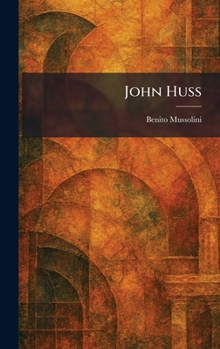
John Huss

"John Huss" is a compelling biographical study of the 15th-century Bohemian reformer whose defiance of the Catholic Church set the stage for the Protestant Reformation. Written by Benito Mussolini during his early intellectual years, this work explores the life, trial, and eventual martyrdom of Jan Hus at the Council of Constance. The narrative delves into the socio-political and religious climate of the late Middle Ages, highlighting Hus's commitment to his theological convictions and his critique of ecclesiastical corruption.
Mussolini examines the spiritual zeal and nationalistic fervor that Hus ignited within the Czech people, portraying him as a pivotal figure in the history of dissent. The text offers readers an insightful look at the intellectual and moral struggle of a man who chose the stake over the recantation of his beliefs. Through a detailed account of the ideological clashes that defined the era, "John Huss" serves as both a historical record of a significant religious figure and a reflection on the nature of heresy, authority, and individual conscience. It remains an important work for those interested in the history of the Christian Church and the early movements that challenged the power of the medieval papacy.
This work has been selected by scholars as being culturally important, and is part of the knowledge base of civilization as we know it. This work was reproduced from the original artifact, and remains as true to the original work as possible. Therefore, you may see the original copyright references, library stamps (as most of these works have been housed in our most important libraries around the world), and other notations in the work.
This work is in the public domain in the United States of America, and possibly other nations. Within the United States, you may freely copy and distribute this work, as no entity (individual or corporate) has a copyright on the body of the work.
As a reproduction of a historical artifact, this work may contain missing or blurred pages, poor pictures, errant marks, etc. Scholars believe, and we concur, that this work is important enough to be preserved, reproduced, and made generally available to the public. We appreciate your support of the preservation process, and thank you for being an important part of keeping this knowledge alive and relevant.
Customer Reviews
ThriftBooks ® and the ThriftBooks ® logo are registered trademarks of Thrift Books Global, LLC
