


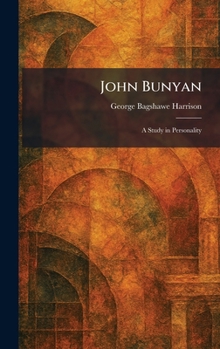
John Bunyan: A Study in Personality

"John Bunyan; A Study in Personality" provides an insightful exploration into the inner life and character of one of English literature's most influential figures. Best known for his allegorical masterpiece "The Pilgrim's Progress", John Bunyan was a man of intense spiritual conviction and complex psychological depth. In this biographical study, G. B. Harrison examines the evolution of Bunyan's personality, from his humble beginnings as a tinker to his periods of profound religious despair and eventual emergence as a powerful preacher and writer.
The work delves into the historical and religious context of 17th-century England, illustrating how Bunyan's personal struggles and his long imprisonment for nonconformist preaching shaped his literary output. By focusing on Bunyan's temperament and the mental landscape that produced his enduring works, Harrison offers readers a nuanced understanding of the man behind the text. This study is an essential resource for those interested in the history of Puritanism, the development of the English novel, and the intersection of faith and creative expression. It highlights Bunyan's resilience and the timeless appeal of his spiritual journey through the lens of early 20th-century scholarship.
This work has been selected by scholars as being culturally important, and is part of the knowledge base of civilization as we know it. This work was reproduced from the original artifact, and remains as true to the original work as possible. Therefore, you may see the original copyright references, library stamps (as most of these works have been housed in our most important libraries around the world), and other notations in the work.
This work is in the public domain in the United States of America, and possibly other nations. Within the United States, you may freely copy and distribute this work, as no entity (individual or corporate) has a copyright on the body of the work.
As a reproduction of a historical artifact, this work may contain missing or blurred pages, poor pictures, errant marks, etc. Scholars believe, and we concur, that this work is important enough to be preserved, reproduced, and made generally available to the public. We appreciate your support of the preservation process, and thank you for being an important part of keeping this knowledge alive and relevant.
Customer Reviews
ThriftBooks ® and the ThriftBooks ® logo are registered trademarks of Thrift Books Global, LLC
