


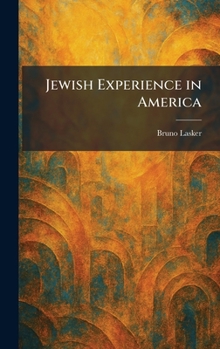
Jewish Experience in America

"Jewish Experience in America" offers a profound sociological and historical exploration of the Jewish community's life in the United States during the early 20th century. This work examines the intricate dynamics of immigration, adaptation, and the persistent effort to maintain cultural and religious heritage within a rapidly changing American landscape. Through a detailed analysis of social conditions, the text addresses the multifaceted challenges faced by Jewish families, ranging from economic struggles in urban environments to the complexities of social integration and the fight against prejudice.
The study highlights the significant contributions of Jewish individuals to American labor, politics, and culture, while also providing a candid look at the internal and external pressures that defined the immigrant experience. By documenting the evolution of community institutions and the shifting perspectives on Jewish identity, "Jewish Experience in America" serves as a vital historical resource. It provides essential context for understanding the broader narrative of the American melting pot and the specific legacy of the Jewish diaspora in shaping the national character. This work is an invaluable reference for students of history, sociology, and ethnic studies seeking to understand the foundational years of the modern Jewish American experience.
This work has been selected by scholars as being culturally important, and is part of the knowledge base of civilization as we know it. This work was reproduced from the original artifact, and remains as true to the original work as possible. Therefore, you may see the original copyright references, library stamps (as most of these works have been housed in our most important libraries around the world), and other notations in the work.
This work is in the public domain in the United States of America, and possibly other nations. Within the United States, you may freely copy and distribute this work, as no entity (individual or corporate) has a copyright on the body of the work.
As a reproduction of a historical artifact, this work may contain missing or blurred pages, poor pictures, errant marks, etc. Scholars believe, and we concur, that this work is important enough to be preserved, reproduced, and made generally available to the public. We appreciate your support of the preservation process, and thank you for being an important part of keeping this knowledge alive and relevant.
Customer Reviews
ThriftBooks ® and the ThriftBooks ® logo are registered trademarks of Thrift Books Global, LLC
