


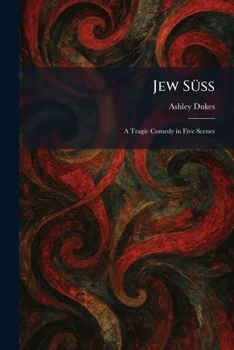
Jew SÃ1/4ss: A Tragic Comedy in Five Scenes

Select Format
Select Condition 
Book Overview
"Jew S 1/4ss: A Tragic Comedy in Five Scenes" is a compelling dramatic adaptation by Ashley Dukes, based on the celebrated novel by Lion Feuchtwanger. Set against the backdrop of the 18th-century Duchy of W 1/4rttemberg, the play chronicles the meteoric rise and subsequent fall of Joseph S 1/4 Ÿ Oppenheimer, a shrewd Jewish financier who ascends to the position of chief minister to the Duke. As Oppenheimer maneuvers through the complex layers of courtly politics and personal ambition, he must navigate the precarious balance between his immense power and the deep-seated prejudices of the society around him.
Dukes' adaptation captures the psychological depth and moral complexity of a man caught in the crosshairs of history. Through five evocative scenes, the work explores themes of identity, sacrifice, and the corrupting nature of absolute authority. The play serves as both a gripping historical narrative and a poignant reflection on the vulnerability of those who seek to bridge cultural and religious divides in a time of social upheaval. "Jew S 1/4ss" remains a significant piece of 20th-century theatrical literature, offering a timeless exploration of human character and the tragic consequences of political hubris.
This work has been selected by scholars as being culturally important, and is part of the knowledge base of civilization as we know it. This work was reproduced from the original artifact, and remains as true to the original work as possible. Therefore, you may see the original copyright references, library stamps (as most of these works have been housed in our most important libraries around the world), and other notations in the work.
This work is in the public domain in the United States of America, and possibly other nations. Within the United States, you may freely copy and distribute this work, as no entity (individual or corporate) has a copyright on the body of the work.
As a reproduction of a historical artifact, this work may contain missing or blurred pages, poor pictures, errant marks, etc. Scholars believe, and we concur, that this work is important enough to be preserved, reproduced, and made generally available to the public. We appreciate your support of the preservation process, and thank you for being an important part of keeping this knowledge alive and relevant.
Related Subjects
DramaCustomer Reviews
ThriftBooks ® and the ThriftBooks ® logo are registered trademarks of Thrift Books Global, LLC
