


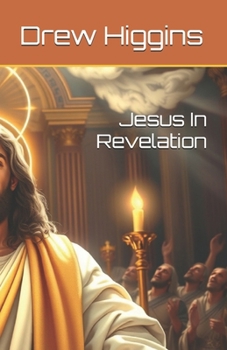
Jesus In Revelation
No Customer Reviews

The First and the Last. Definition and Old Testament Background. In Isaiah 44:6, the Lord declares, "I am the first, and I am the last; no God exists but me." When Jesus repeats this language, He directly identifies Himself with Yahweh, the Creator of Israel. The designation speaks to His unchanging nature, His preexistence before creation, and His sovereign rule over all history. Christological Implication. By declaring, "I am the First and the Last," Jesus claims authority over every age-past, present, and future. For believers, this means our Savior transcends temporal limitations; He was active in creation (John 1:3), and He will also preside over the consummation of all things (cf. Revelation 22:13). The Living One. Triumph Over Death. In Greco-Roman thought, death was a final end. The gods themselves were subject to mortality in popular mythology. Jesus' affirmation-"I was dead, but now look, I am alive for ever and ever " (Rev. 1:18)-shocks and liberates. His resurrection is the hinge upon which eternal hope turns. Implications for Resurrection Theology. The resurrection is not merely an event in Jesus' past; it is a present reality. His ongoing, unceasing life secures our own. When He says, "I hold the keys of death and hell," He proclaims that no power, no realm, can lock us away from His redemptive love.
Format:Paperback
Language:English
ISBN:B0FBGR3BQZ
ISBN13:9798285807414
Release Date:May 2025
Publisher:Independently Published
Length:412 Pages
Weight:0.88 lbs.
Dimensions:0.8" x 5.1" x 7.8"
Customer Reviews
0 rating
Copyright © 2026 Thriftbooks.com Terms of Use
| Privacy Policy | Do Not
Sell/Share My Personal Information | Cookie Policy | Cookie Preferences | Accessibility Statement
ThriftBooks® and the ThriftBooks® logo are registered trademarks of Thrift Books Global, LLC
ThriftBooks® and the ThriftBooks® logo are registered trademarks of Thrift Books Global, LLC
