


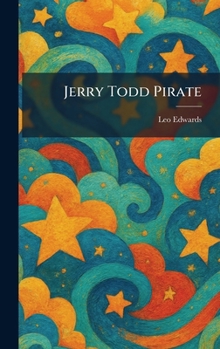
Jerry Todd Pirate

"Jerry Todd Pirate" is a spirited juvenile adventure novel that follows the exploits of the charismatic Jerry Todd and his circle of friends in the small town of Tutter. When the boys become enthralled by the lore of piracy and the possibility of local secrets, they embark on a series of imaginative escapades and clever investigations. Known for its unique blend of humor, mystery, and authentic depictions of childhood camaraderie, this story captures the adventurous spirit of young boys in early 20th-century America.
In this installment, the group's obsession with pirates leads to elaborate schemes, secret meetings, and daring encounters. Leo Edwards masterfully balances lighthearted pranks with genuine suspense, making "Jerry Todd Pirate" a standout example of classic boys' fiction. Readers are drawn into the nostalgic charm of the setting and the resourceful problem-solving skills of its youthful protagonists. This work remains a significant piece of vintage children's literature, celebrating the enduring themes of curiosity, friendship, and the thrill of the hunt for hidden truth.
This work has been selected by scholars as being culturally important, and is part of the knowledge base of civilization as we know it. This work was reproduced from the original artifact, and remains as true to the original work as possible. Therefore, you may see the original copyright references, library stamps (as most of these works have been housed in our most important libraries around the world), and other notations in the work.
This work is in the public domain in the United States of America, and possibly other nations. Within the United States, you may freely copy and distribute this work, as no entity (individual or corporate) has a copyright on the body of the work.
As a reproduction of a historical artifact, this work may contain missing or blurred pages, poor pictures, errant marks, etc. Scholars believe, and we concur, that this work is important enough to be preserved, reproduced, and made generally available to the public. We appreciate your support of the preservation process, and thank you for being an important part of keeping this knowledge alive and relevant.
Customer Reviews
ThriftBooks ® and the ThriftBooks ® logo are registered trademarks of Thrift Books Global, LLC
