


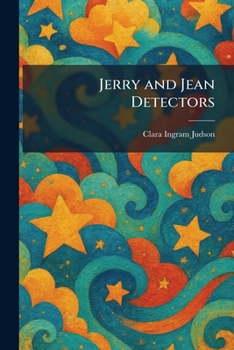
Jerry and Jean Detectors

In "Jerry and Jean Detectors", Clara Ingram Judson delivers a spirited and engaging mystery adventure designed for young readers. The narrative follows the inquisitive duo, Jerry and Jean, as they transform their everyday surroundings into a world of investigation and intrigue. Through their sharp observations and collaborative efforts, the young protagonists navigate a series of puzzles that challenge their wits and showcase their developing deductive skills.
Set within the wholesome context of early 20th-century family life, the work emphasizes themes of curiosity, teamwork, and the importance of integrity. Judson's storytelling captures the essence of childhood wonder while providing a structured mystery that keeps the reader guessing. "Jerry and Jean Detectors" stands as a classic example of juvenile detective fiction, highlighting the resourcefulness of children and the timeless appeal of a well-crafted sleuth story. This work is an excellent choice for those interested in the history of children's literature and the early development of the mystery genre for young audiences.
This work has been selected by scholars as being culturally important, and is part of the knowledge base of civilization as we know it. This work was reproduced from the original artifact, and remains as true to the original work as possible. Therefore, you may see the original copyright references, library stamps (as most of these works have been housed in our most important libraries around the world), and other notations in the work.
This work is in the public domain in the United States of America, and possibly other nations. Within the United States, you may freely copy and distribute this work, as no entity (individual or corporate) has a copyright on the body of the work.
As a reproduction of a historical artifact, this work may contain missing or blurred pages, poor pictures, errant marks, etc. Scholars believe, and we concur, that this work is important enough to be preserved, reproduced, and made generally available to the public. We appreciate your support of the preservation process, and thank you for being an important part of keeping this knowledge alive and relevant.
Customer Reviews
ThriftBooks ® and the ThriftBooks ® logo are registered trademarks of Thrift Books Global, LLC
