


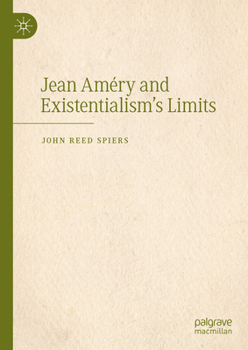
Jean Améry and Existentialism's Limits

This book provides an in-depth analysis of the influences and impact of philosopher, writer and public intellectual, Jean Am ry. Am ry's writing is often analysed in terms of his experiences as a Jew in Austria during WWII which saw him stripped of his identity, driven into exile, and dehumanised in torture and the death camps. Despite the increasing interest in the philosophical, ethical, and literary dimensions of Am ry's thought, little research discusses his relationship with the most important intellectual discovery of his life: existentialism. This book contributes to and expands upon recent engagements with Am ry's work by situating him within the existential tradition and discussing his writing within the context of his peers and influences. John Reed Spiers argues that reading Am ry in the context of the existential tradition contributes to a greater appreciation of his importance as a writer reflecting on the human condition, broadening the Anglophone reception of his work beyond Holocaust Studies, trauma studies, and victimology.
Customer Reviews
ThriftBooks® and the ThriftBooks® logo are registered trademarks of Thrift Books Global, LLC
