


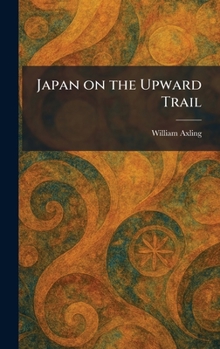
Japan on the Upward Trail

Select Format
Select Condition 
Book Overview
"Japan on the Upward Trail" provides a compelling exploration of the cultural, social, and spiritual landscape of Japan during the early 20th century. Written by William Axling, a dedicated missionary with an intimate knowledge of the country, this work examines the rapid transformation of Japanese society as it navigated the intersection of ancient traditions and modern Western influences. Axling offers a series of insightful sketches that highlight the individuals and movements driving progress in education, moral reform, and social welfare.
The book focuses on the influence of Christian ideals in shaping the nation's development, documenting the challenges and successes of early converts and missionary efforts. By detailing the lives of Japanese leaders and the growth of local institutions, the work captures a pivotal moment of national evolution. "Japan on the Upward Trail" serves as an important historical resource for understanding East-West relations and the role of faith in the modernization of East Asia. Through its vivid descriptions and historical context, the work emphasizes the resilience and aspiration of the Japanese people during a time of significant transition.
This work has been selected by scholars as being culturally important, and is part of the knowledge base of civilization as we know it. This work was reproduced from the original artifact, and remains as true to the original work as possible. Therefore, you may see the original copyright references, library stamps (as most of these works have been housed in our most important libraries around the world), and other notations in the work.
This work is in the public domain in the United States of America, and possibly other nations. Within the United States, you may freely copy and distribute this work, as no entity (individual or corporate) has a copyright on the body of the work.
As a reproduction of a historical artifact, this work may contain missing or blurred pages, poor pictures, errant marks, etc. Scholars believe, and we concur, that this work is important enough to be preserved, reproduced, and made generally available to the public. We appreciate your support of the preservation process, and thank you for being an important part of keeping this knowledge alive and relevant.
Customer Reviews
ThriftBooks ® and the ThriftBooks ® logo are registered trademarks of Thrift Books Global, LLC
