


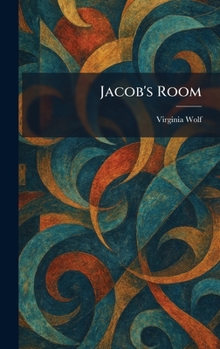
Jacob's Room

"Jacob's Room" is a landmark of modernist literature, representing a bold departure from traditional narrative structures. The novel follows the life of Jacob Flanders, from his childhood on the shores of Cornwall to his student days at Cambridge and his eventual travels through Europe. Rather than offering a direct biographical account, the narrative is constructed through a series of impressions, fleeting moments, and the perspectives of the people who encounter him. This experimental approach emphasizes the elusive nature of human identity and the fragments of memory that define a person's existence.
Set against the backdrop of pre-war England, the work captures the atmosphere of a generation on the precipice of change. The poignant absence of the protagonist is felt through the objects and spaces he leaves behind, reflecting the broader sense of loss and disillusionment following the Great War. With its lyrical prose and innovative use of stream of consciousness techniques, "Jacob's Room" serves as a profound meditation on time, connection, and the difficulty of truly knowing another person. It remains a vital example of Virginia Woolf's evolving style and her mastery of the psychological novel.
This work has been selected by scholars as being culturally important, and is part of the knowledge base of civilization as we know it. This work was reproduced from the original artifact, and remains as true to the original work as possible. Therefore, you may see the original copyright references, library stamps (as most of these works have been housed in our most important libraries around the world), and other notations in the work.
This work is in the public domain in the United States of America, and possibly other nations. Within the United States, you may freely copy and distribute this work, as no entity (individual or corporate) has a copyright on the body of the work.
As a reproduction of a historical artifact, this work may contain missing or blurred pages, poor pictures, errant marks, etc. Scholars believe, and we concur, that this work is important enough to be preserved, reproduced, and made generally available to the public. We appreciate your support of the preservation process, and thank you for being an important part of keeping this knowledge alive and relevant.
Customer Reviews
ThriftBooks ® and the ThriftBooks ® logo are registered trademarks of Thrift Books Global, LLC
