


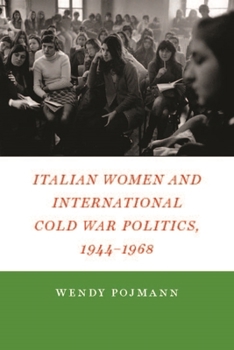
Italian Women and International Cold War Politics, 1944-1968

The women of the Socialist/Communist Unione Donne Italiane (UDI) and the lay Catholic Centro Italiano Femminile (CIF) are the protagonists in this keen study of the relationship between national Italian women's associations and international women's movements from 1944, when the associations became active, to 1968, when another generation of activists led women's movements in a new direction. By considering the reach and impact of these organizations in relation to Italian bipolarism (the nearly equal division of the Italian people into two camps, one pro-Communist and the other pro-Western) and world events, Dr. Wendy Pojmann demonstrates that women played a much larger role than Cold War histories tend to relate. Not just voters, women were active political participants during the tumultuous decades of the Cold War. Italian Women in International Cold War Politics, 1944-1968 pays particular attention to the UDI's work with the largest
international postwar women's organization, the pro-Soviet Women's International Democratic Federation (WIDF), and the CIF's relationship with the global Catholic organization the World Movement of Mothers (WMM), to better understand the ways in which the Cold War affected both national and international agendas for women's rights.
Related Subjects
History Political Science Politics & Social Sciences Social Science Social SciencesCustomer Reviews
ThriftBooks ® and the ThriftBooks ® logo are registered trademarks of Thrift Books Global, LLC
