


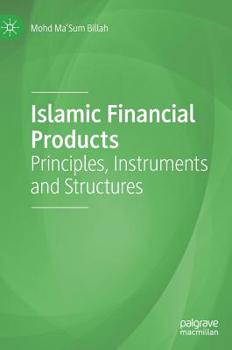
Islamic Financial Products: Principles, Instruments and Structures

Select Format
Select Condition 
Book Overview
Part I: An Overview of Islamic Financial System
Chapter 1: Islamic Financial System
Chapter 2: Role of the OIC and other International Organizations towards a Sustainable Development of Islamic Finance
Chapter 3: Evolution of Islamic Financial Products and Services
Part II: Governing Principles and Strategies of Islamic Financial Products and Services
Chapter 4: Islamic Financial Policies
Chapter 5: Islamic Financial Services Board (IFSB) and Its Regulatory Functions in Islamic Financial Industries
Chapter 6: Bay' al-'Inah (buy back sale) and Its Position in the Modern Islamic Finance
Chapter 7: Instruments Facilitate Islamic Financing
Chapter 8: Pricing Techniques of Islamic Financial ProductsChapter 9: Remedies for Breach of Financial Contract under Shari'ah
Part III: Islamic Financial Products
Chapter 10: Islamic Equity Financing: al-Musharakah, al-Mudharabah and al-Qiradh
Chapter 11. Islamic Debt Financing
Chapter 12. Islamic Trade Financing Instruments and Mechanisms
Chapter 13. Islamic Trade Financing Frameworks
Chapter 14: Shari'ah Model of International Trade Financing
Chapter 15: Islamic Model of International Trade and Shipping
Chapter 16: Islamic Accepted Bill
Chapter 17: Islamic Lease Financing (al-Ijarah)
Chapter 18: Islamic Leasing Leading to Ownership (al-IjarahTantahi Bi al-Tamleek)
Chapter 19: Islamic Hire-purchase (al-IjarahThumma al-Bay') Chapter 20: Islamic Manufacture Financing (al-Istisna')Chapter 21: Islamic Manufacture Financing Contract ('Aqd al-Istisna')
Chapter 22: Islamic Venture Capital
Chapter 23: Sukuk Paradigm and Structure
Chapter 24: Islamic Loan (al-Qardh)
Chapter 25. Islamic Financial Wealth Management
Chapter 26: Islamic Financial PlanningChapter 27: Islamic Unit Trust (Micro-saving)
Chapter 28: Islamic Financing for the Sustainable Development Growth (i-SDG)
Chapter 29: Islamic Fin-tech: Digital Financial Products
Chapter 30: Islamic Cryptocurrency
Customer Reviews
ThriftBooks® and the ThriftBooks® logo are registered trademarks of Thrift Books Global, LLC
