


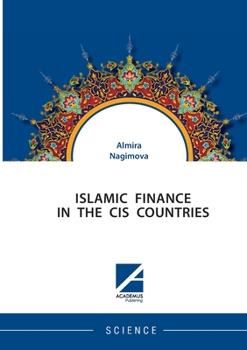
Islamic Finance in the Cis Countries

Over the past decades Islamic finance has expanded its presence to many countries, including the states of the former Soviet Union. How big is the market for Islamic finance in the post-Soviet region? Who are its key players? What are their investment strategies in this territory? And what limits the development of the industry in the CIS countries?
This book answers those questions from an empirical base of more than a thousand deals concluded between 1991 and 2020, supplemented by a sociological survey of market participants. On that material the author assesses the total volume of Islamic capital in the region and sets out the problems and prospects of the market.
Each country is examined separately: Kazakhstan, which declared its intention to become the regional centre of Islamic banking and reached less than 0.2 per cent of its economy; Uzbekistan, Azerbaijan, Turkmenistan, Kyrgyzstan and Tajikistan, each with its own political economy of religion and capital; and Russia, home to the largest Muslim population in Europe. A separate chapter is devoted to the investment strategy of the Islamic Development Bank in post-Soviet Central Asia and Transcaucasia, the single largest source of Islamic capital in the region.
The study shows that the growth of Islamic finance in the CIS has depended as much on legislation, on the attitude of the authorities to religious identity and on the investment logic of Gulf institutions as on demand from believers themselves.
The book will be of interest to the management of banks, investment companies and funds, to ministries and development institutions, and to anyone concerned with the world economy, international relations and the role of the religious factor in the economies of the post-Soviet states.
Customer Reviews
ThriftBooks ® and the ThriftBooks ® logo are registered trademarks of Thrift Books Global, LLC
