


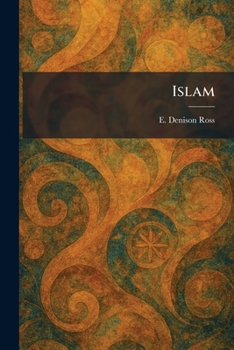
Islam

"Islam" offers a comprehensive and scholarly introduction to the history, doctrines, and cultural impact of the Islamic faith. Written by the renowned orientalist Sir E. Denison Ross, this work provides a clear overview of the life of Muhammad, the development of the Quran, and the rapid expansion of Islamic civilization across the Middle East, Africa, and Asia.
The book examines the foundational tenets of the religion, including the five pillars and the evolution of Islamic law and theology. It also explores the various sects and mystical traditions, such as Sufism, that have shaped the diverse landscape of the Muslim world. Through an objective and historical lens, Ross illuminates the intellectual and artistic contributions of Islamic societies during the Middle Ages and their enduring influence on global history. This volume serves as an essential guide for readers seeking to understand the religious and social frameworks that define one of the world's most significant monotheistic faiths. It remains a valuable resource for those interested in comparative religion and Middle Eastern history.
This work has been selected by scholars as being culturally important, and is part of the knowledge base of civilization as we know it. This work was reproduced from the original artifact, and remains as true to the original work as possible. Therefore, you may see the original copyright references, library stamps (as most of these works have been housed in our most important libraries around the world), and other notations in the work.
This work is in the public domain in the United States of America, and possibly other nations. Within the United States, you may freely copy and distribute this work, as no entity (individual or corporate) has a copyright on the body of the work.
As a reproduction of a historical artifact, this work may contain missing or blurred pages, poor pictures, errant marks, etc. Scholars believe, and we concur, that this work is important enough to be preserved, reproduced, and made generally available to the public. We appreciate your support of the preservation process, and thank you for being an important part of keeping this knowledge alive and relevant.
Customer Reviews
ThriftBooks ® and the ThriftBooks ® logo are registered trademarks of Thrift Books Global, LLC
